
Research suggests therapy with a real counsellor over video can work about as well as in person for many children and young people, and in research, mostly with adults, the relationship that makes it work holds up on screen (von Wirth, 2023; Seuling, 2023). But ‘online therapy’ now covers everything from chatbots to subscription apps, and how it’s delivered shapes what your child gets. This guide sets out the evidence, explains how good online therapy should work, and how to judge whether it’s right for your child.
Article summary
Key takeaways
- Young people with anxiety or depression improve just as much online as they do in the room.
- The relationship with the counsellor is consistently associated with better outcomes, and that bond can form just as well online.
- Online therapy can mean a chatbot, a subscription app, or a counsellor of your own. They're very different things.
- The way a service works matters: good ones offer the same counsellor at the same time each week, and you only pay for the sessions your child has.
- It's not right for every child. Very young children, those in crisis, or a home with no private space are all reasons to think again.
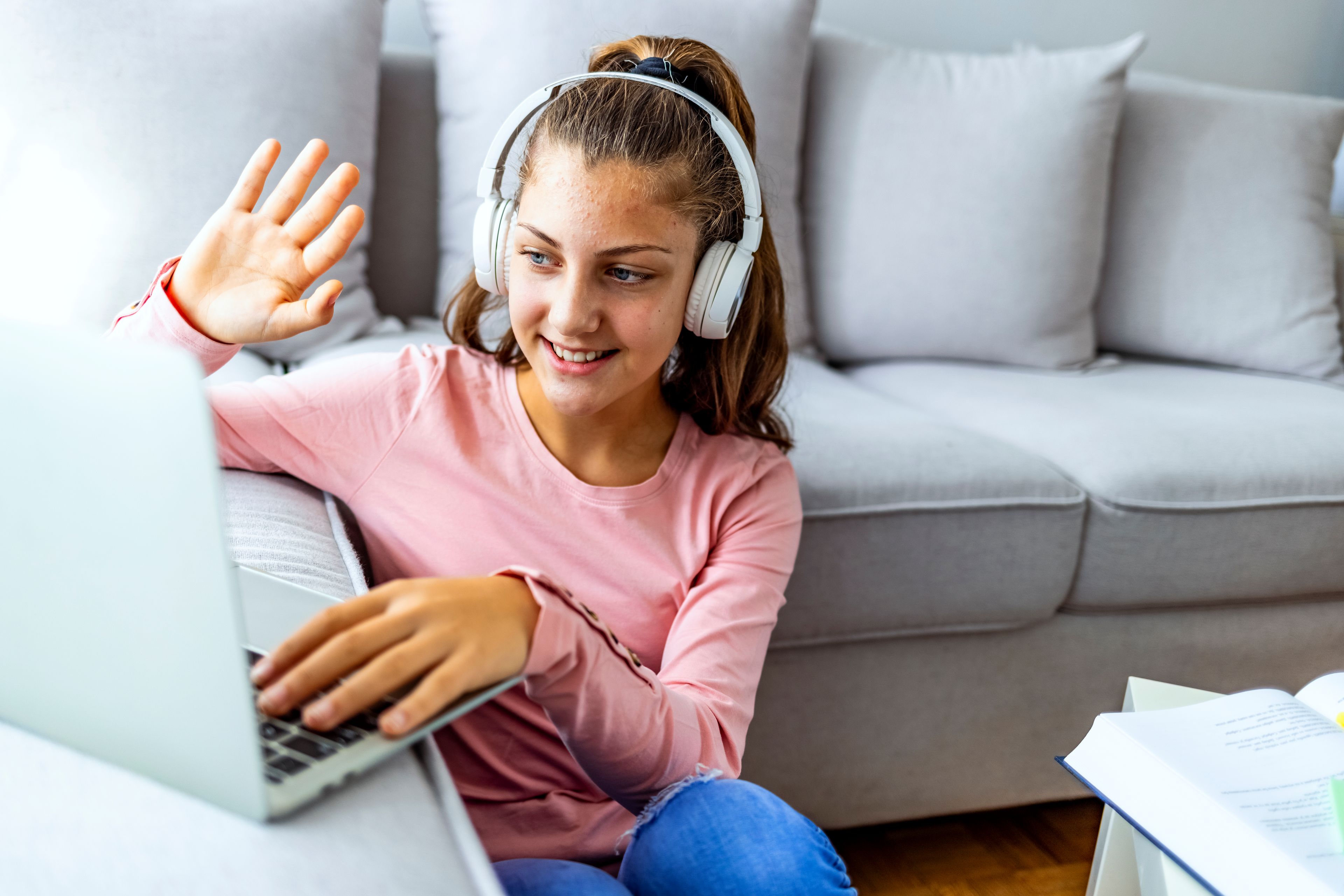
If you're looking into therapy for your child, most of what you'll find now happens online. That word ‘online’ is doing a lot of work. It covers self-help apps, chatbots, big subscription platforms, and a qualified counsellor working live with your child over video. They’re not the same thing, and the differences are easy to miss.
Here’s what the research shows about online therapy for young people, how to identify a good online service, and how to judge whether it's the right fit for your child.
‘Online therapy’ can mean three very different things
The first kind is a self-help app or a chatbot. Your child works through exercises on a screen, mostly on their own. The evidence for these is mixed, and how much young people actually use them varies a lot [1].
The second kind is a subscription platform. These are large companies, most of them American, heavily advertised and often endorsed by a celebrity. There are real therapists behind them, but they’re chosen for you from a pool of thousands (often based in the US), vetted to the company's own standards, and much of your contact with them runs through an app. The model has an awkward incentive built in: you pay whether or not sessions happen, and live sessions are the company's biggest cost. None of that reflects on the therapists themselves. It means the service is built for scale.
The third kind is a counsellor of your own, working with your child live over video. It's the same conversation and the same care you would find in a counselling room. You know exactly who they are, and they know your child. This is the kind Finding Therapy offers, it's what parents usually mean when they ask whether online therapy works, and it's the kind the strongest evidence is about. The rest of this guide is about that third kind.
Does online therapy work as well as sitting in the same room?
For most young people, yes, and this is where the research is clearest.
When researchers put the two side by side, the difference in how well young people do is tiny. A review of video therapy for children, teenagers and their parents found it just as effective as meeting in person. That held both for reducing symptoms and for helping young people function day to day [2]. A 2024 review by UK researchers found the same for anxiety and depression: CBT delivered online or by phone was no less effective than face to face [3].
One review shows how close the two can be. In CBT trials with young people aged 10 to 25, the improvement reported in the online groups and the in-person groups was near enough identical.

The picture in adults matches. A large review found very little difference between video and in-person therapy, and the strongest effects for anxiety and depression [5]. Those are the very things most young people come to therapy for. A separate review, spanning a wide mix of ages and settings, also found little difference between the two [6].
“VCP was equally effective as in-person treatment in reducing children's symptoms and functional impairments.”
The relationship still comes first
The relationship between a young person and their counsellor matters a great deal. Counsellors call it the ‘therapeutic alliance’. For your child it means feeling safe with, understood by, and able to trust the person they talk to. A trusting relationship is consistently associated with better outcomes.
This bond seems to hold up through a screen. Most of the research on this is with adults. A review of the research found no meaningful difference in the strength of the relationship between video and in-person therapy, whether patients or therapists did the rating [7]. For young people, the evidence is less direct. If the bond were weaker on a screen, the results would suffer, and in the youth studies above they do not.
“VCP and PIP did not differ with respect to the therapeutic alliance as rated by either patients or therapists.”
Not every study finds the bond identical. One UK review of adult therapy could not show the online bond was quite as strong on average, though the results of therapy were just as good [8]. The lesson is not that online is weaker. The bond comes from finding the right counsellor, which is why who sits on the other side of the screen matters so much. If you want to think that part through, we have a guide on how to choose the right therapist for your child.
Why online therapy can suit a young person especially well
Most young people are digital natives. They've grown up talking, playing and learning through screens, and they're often far more at ease there than their parents' generation. For some, the screen is not a compromise at all. It lowers the barrier to starting.
Teenagers who dread a waiting room, or who find eye contact hard, often find it easier to open up from their own bedroom. In one study, young people having therapy for social anxiety said the online format made it easier to talk to their counsellor and to keep going [9]. Students describe valuing the privacy and the sense of doing it on their own terms [10].
Online therapy may also reach the young people who need support most. When secondary school students were asked whether they would use online counselling, those in the most distress were the most drawn to it [11]. If social anxiety is part of the picture for your child, our guide on social anxiety in children and teenagers may help.
Then there is reach. Online therapy removes the travel, and it widens the pool far beyond who happens to practise nearby, which matters most for families in rural areas, those struggling to find the right fit locally or those seeking a particular specialism [12]. It also reaches young people who would otherwise be waiting. Waits for NHS support are long and getting longer.
365,731
children in England were still waiting for mental health support at the end of 2024-25
For a family on a list like that, therapy that can begin from home is not a lesser option. With us, a first session can be arranged in as little as 48 hours of getting in touch. If you're weighing up the NHS route alongside private support, our parent's guide to CAMHS sets out how it works.
For a young person who dreads the waiting room, a familiar bedroom can be the safest place to begin.
How our service works
The research says online therapy works. How well it works for one particular child still depends on the service, so here is how ours works.
A small team, chosen carefully
Finding Therapy is not a marketplace. We work with a small, established team of counsellors rather than a pool of thousands, and Helen, our head of counselling, has known them for years. Every one is qualified, registered with a UK professional body, and vetted by us before they ever meet a family. They're independent, experienced practitioners who are skilled at working with children and young people.
The same counsellor, at the same time each week
Your child sees the same counsellor every week, usually at the same time. Nobody is reassigned, and nothing is decided by an algorithm. A regular slot gives the work a rhythm: your child knows when their space is coming, and their counsellor holds it for them. And when life gets in the way, the time can move.
People, not a platform
You can choose your counsellor yourself, knowing that everyone on our team is someone we vouch for. If you'd like help choosing, you can book a free consultation with Helen, our Head of Counselling, who can help with a recommendation.
Once sessions begin, you deal with your counsellor directly. A question between sessions goes to the person who knows your child, not a support inbox. Counsellors are in sessions much of the day, so they’re not instantly available, but they're reachable, and they reply themselves.
“Many of the young people I meet online are nervous to begin with, and that is completely understandable. What often surprises parents is how quickly a child settles when they are talking from their own room, with their own things around them. The trust we build is every bit as real as it would be in person, and for an anxious young person it sometimes comes more easily.”
 Vanessa CrutchlowMBACP, Finding TherapyView profile
You only pay for sessions that happen
There’s no subscription and no plan to cancel. You book sessions, and you pay for the sessions your child has. If therapy pauses, so does the cost. We're a private service, so it’s not free. Our prices are clear before you commit, and you'll never pay for therapy that did not happen, unless it’s cancelled within 24 hours of the appointment.
When online therapy is not the right fit
Online therapy is not one size fits all, and a good service will say so.
Clinicians who have worked both ways are clear that it suits many children, but is not the best choice for all [14]. Very young children, who often show what they feel through play and movement rather than talking, and young people with more complex or higher risk needs, may do better with the fuller picture the room gives a counsellor. It also asks something practical of the home: a private, quiet space, a device, and a reliable internet connection. Where those are missing, online therapy can widen the gap rather than close it [15].
“Psychological interventions delivered via videoconferencing are not suitable for all children, but can be greatly beneficial for some.”
Finding Therapy is not a crisis or emergency service, and weekly counselling is not what a crisis needs. If you believe your child is in immediate danger, call 999 or go to A&E. If you're worried about their safety, contact your GP and ask for an urgent appointment, or call NHS 111 and choose the mental health option. You don't have to be sure how serious it is before asking for help. If you're unsure, call NHS 111.
Listening support is there at any hour too. Samaritans are on 116 123 and Childline on 0800 1111. You can also text SHOUT to 85258.
Is online therapy right for your child?
If you're weighing it up, a few questions can help:
- Does your child open up more easily at home, or would being in the room feel safer to them?
- Is there somewhere private and quiet where they could talk without being overheard?
- Are they comfortable enough with a video call to relax into it?
- How old are they? Younger children may need more thought as to whether they’ll be able to engage online.
- Are you looking for a particular kind of help, or a specialism, that’s hard to find locally?
There’s no single right answer, and you don’t have to work it out alone.
If online therapy sounds like it could suit your child, you can browse our counsellors and choose for yourself. Every one of them is qualified, experienced, and is someone we've vetted and known for years. If you'd rather have help choosing, you can book a free consultation with Helen Spiers, our Head of Counselling, who can help with a recommendation. We're a private, paid service rather than a crisis or diagnosis service. No GP referral is needed, and we work with children and young people aged 6 to 25.
Frequently asked questions
References
- Hollis et al. (2017). Annual Research Review: Digital health interventions for children and young people with mental health problems, a systematic and meta-review., Journal of Child Psychology and Psychiatry. https://doi.org/10.1111/jcpp.12663 Accessed 3 July 2026. ↩
- von Wirth et al. (2023). Effectiveness of videoconference-delivered psychotherapy for children, adolescents, and their parents: A meta-analysis of randomized controlled trials., Journal of Telemedicine and Telecare. https://doi.org/10.1177/1357633x231199784 Accessed 3 July 2026. ↩
- Bevilacqua et al. (2024). Effectiveness of technology-assisted vs face-to-face cognitive behavioural therapy for anxiety and depression in children and young people: A systematic review and meta-analysis., Clinical Child Psychology and Psychiatry. https://doi.org/10.1177/13591045241259070 Accessed 3 July 2026. ↩
- Howes et al. (2021). Relative Effectiveness of Online Cognitive Behavioural Therapy with Anxious or Depressed Young People: Rapid Review and Meta-analysis, Australian Social Work. https://doi.org/10.1080/0312407x.2021.2001832 ↩
- Fernandez et al. (2021). Live psychotherapy by video versus in-person: A meta-analysis of efficacy and its relationship to types and targets of treatment., Clinical Psychology and Psychotherapy. https://doi.org/10.1002/cpp.2594 Accessed 3 July 2026. ↩
- Batastini et al. (2021). Are videoconferenced mental and behavioral health services just as good as in-person? A meta-analysis of a fast-growing practice., Clinical Psychology Review. https://doi.org/10.1016/j.cpr.2020.101944 Accessed 3 July 2026. ↩
- Seuling et al. (2023). Therapeutic alliance in videoconferencing psychotherapy compared to psychotherapy in person: A systematic review and meta-analysis., Journal of Telemedicine and Telecare. https://doi.org/10.1177/1357633x231161774 Accessed 3 July 2026. ↩
- Norwood et al. (2018). Working alliance and outcome effectiveness in videoconferencing psychotherapy: A systematic review and noninferiority meta-analysis., Clinical Psychology and Psychotherapy. https://doi.org/10.1002/cpp.2315 Accessed 3 July 2026. ↩
- Leigh et al. (2023). Adolescents' experience of receiving internet-delivered cognitive therapy for social anxiety disorder., Internet Interventions. https://doi.org/10.1016/j.invent.2023.100664 Accessed 3 July 2026. ↩
- Hanley and Wyatt (2020). A systematic review of higher education students' experiences of engaging with online therapy., Counselling and Psychotherapy Research. https://doi.org/10.1002/capr.12371 Accessed 3 July 2026. ↩
- Glasheen et al. (2015). Online counselling in secondary schools: would students seek help by this medium?, British Journal of Guidance and Counselling. https://doi.org/10.1080/03069885.2015.1017805 Accessed 9 July 2026. ↩
- Sharma et al. (2025). Telepsychiatry, access, and equity: accelerating mental health care for rural and low-income youth., Frontiers in Public Health. https://doi.org/10.3389/fpubh.2025.1698682 Accessed 3 July 2026. ↩
- Children's Commissioner (2026). children in England were still waiting for mental health support at the end of 2024-25. https://www.childrenscommissioner.gov.uk/resource/childrens-and-young-peoples-mental-health-services-2024-25/ ↩
- Hagyari-Donaldson et al. (2024). Online Therapy for Children: Yay or Nay? Clinicians' Insights from the COVID-19 Era., Child and Youth Care Forum. https://doi.org/10.1007/s10566-024-09835-3 Accessed 3 July 2026. ↩
- Aisbitt et al. (2022). Editorial Perspective: The digital divide, inequalities in remote therapy for children and adolescents., Child and Adolescent Mental Health. https://doi.org/10.1111/camh.12545 Accessed 3 July 2026. ↩