
Gaming is one of the most common things children do, and it’s often a huge source of worry for parents. However, it’s actually the screen activity least linked to harm, once researchers separate it out from social media. A small number of children do develop a real problem, but spotting them has little to do with counting hours. This guide sets out what the evidence shows, what to look for, and what helps at home.
Article summary
Key takeaways
- Gaming is normal. Six in ten UK children aged 3 to 17 play games online, and nine in ten parents say their child games on some device.
- When gaming is looked at separately from social media, it’s one of the screen activities least linked to poor mental health.
- Hours are a poor measure. In one large study, total screen time was not linked to later mental health, but use that looked addictive was.
- Mental health difficulties tend to come before gaming problems, more often than the other way round.
- Setting clear rules is linked to better outcomes. Setting them in a controlling way is linked to worse ones.
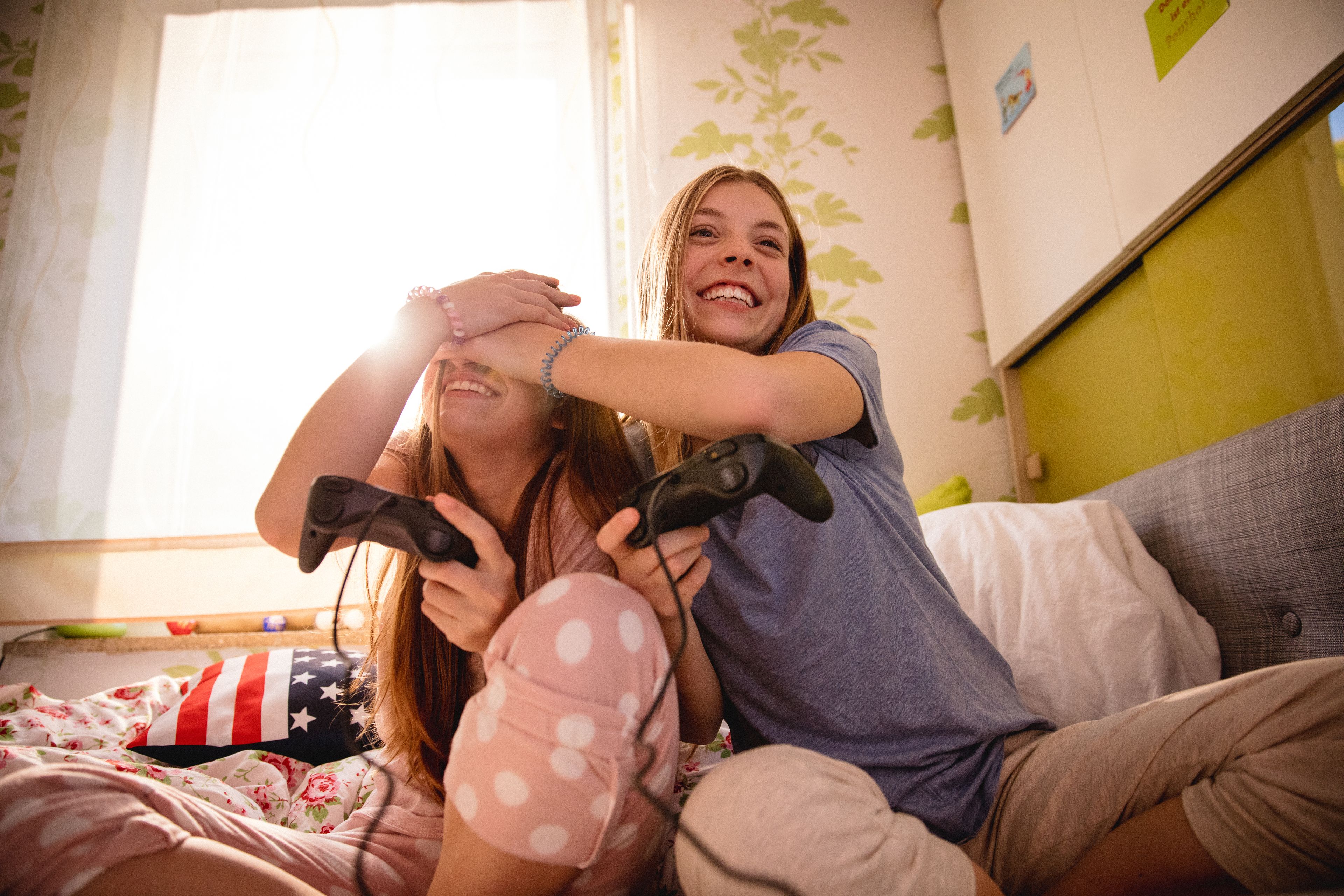
Six in ten UK children aged 3 to 17 play games online, and nine in ten parents say their child games on at least one device [1]. So gaming is very normal. However, if a child is gaming for hours a day, most parents will at some point wonder whether it’s doing harm, and whether they should be stopping it.
The specific research on gaming is more reassuring than some might expect and it says something more useful than "limit it to two hours". A small minority of children do develop a genuine problem with gaming, and the signs that distinguish them from the majority have very little to do with how long they play.
Gaming isn’t the same as other screen time
Screen time is usually talked about as one thing. When researchers look at each activity separately, they find that different activities are linked to mental health in very different ways.
Two large UK studies looked at this. In the first, time on social media and the internet was much more closely linked to self-harm, low mood and low self-esteem than time spent gaming or watching TV [2]. The second, which asked teenagers to keep a diary of their time, found little sign of a link between gaming and mental health, while social media and internet use were linked to self-harm and low mood in girls [3].
A third UK study followed more than 11,000 children over time, from the age of 11 to 14.
24% lower
Depression scores at age 14 among boys who gamed most days at age 11, compared with boys who gamed less than once a month
In other words, boys who gamed most days had lower depression scores three years later than boys who hardly gamed at all. Girls who used social media most days showed the opposite pattern, with higher scores [4].
Different kinds of screen time may be linked to teenagers’ mood in quite different ways, so efforts to manage screen time may need to treat them differently.
These studies show patterns rather than causes. The link in boys was also strongest among the least physically active, which suggests gaming may have been making up for something else, such as a lack of company, rather than being good for them in itself. So the research doesn’t show that gaming is good for children. It shows that gaming is not the risk it’s sometimes assumed to be.
Ordinary gaming and problem gaming are different things
Much of the worry about gaming comes from treating heavy gaming and problem gaming as the same thing. They’re not, and the difference shows up clearly when researchers stop counting hours and look at whether the gaming is causing difficulties.
A very large Italian study of almost 90,000 teenagers sorted them into groups by how much difficulty their gaming was causing.

Around half gamed without any problems, and they reported slightly better health than the third who didn’t game at all. The much smaller groups whose gaming was causing difficulties were more likely to be struggling than those who didn’t game [5].
Gaming disorder is a real diagnosis, recognised by the World Health Organization. But it’s uncommon: around 2 in 100 children and teenagers meet the criteria [6]. Much higher figures are sometimes quoted, but these usually come from studies of people already seeking help, or from combining studies that measured quite different things.
The difference matters. One study measured ordinary gaming and signs of gaming disorder separately, in both children and teenagers, and found no clear link between ordinary gaming and symptoms of depression [7].
The finding that changes the question
When gaming and mental health difficulties appear together, it’s natural to assume the gaming came first. Studies that follow young people over time suggest it’s more often the other way round.
Researchers followed 4,289 young people over time, checking their mental health and their gaming three times along the way. Those who were already struggling with their mental health at the start were more likely to go on to have a problem with gaming. It did not work the other way round: young people with a gaming problem were not more likely to go on to struggle with their mental health [8].
Mental health difficulties were linked to teenagers going on to develop gaming disorder. Helping with the underlying difficulties may make gaming disorder less likely, or less severe.
Other studies have found the same. In children, low mood tended to come before gaming problems rather than follow them [7], and a study spanning the start of the pandemic found the same for anxiety and low mood [9]. Children who had been through several difficult experiences, or whose parents had mental health difficulties, were also more likely to be gaming heavily later on [10].
The effects are modest, but they consistently point the same way. And that changes the question worth asking.
Not: what is gaming doing to my child? But: what is my child getting from gaming that they’re not getting anywhere else?
Sometimes the answer is simply enjoyment, and that’s a complete answer. Sometimes it’s company, or the feeling of being good at something, or a place where the rules are clear and nobody is judging them, or a few hours where the worry stops. Those answers lead somewhere more useful than counting the hours might.
So is this ordinary gaming, or a problem?
Two children can play for the same number of hours, and only one of them has a problem. A large American study that followed teenagers for several years found that how much time they spent on screens at the start was not linked to their later mental health. What mattered was whether their use had started to look addictive: hard to control, and hard to step away from [11].
The difference is what the gaming is costing. One thing researchers think puts young people at risk is when their needs are being met inside the game at the expense of their life outside it [12].
In practice, these are some signs worth taking seriously:
- Sleep has gone, or they’re gaming into the night.
- School is slipping, or they’re increasingly reluctant to go.
- Friendships outside the game have quietly fallen away.
- Meals are being skipped or eaten at the screen.
- Stopping produces distress or rage that’s out of proportion, rather than ordinary irritation.
- They’re hiding how much they play, or playing in secret.
- Sessions are getting longer to produce the same relief.
- The gaming has stopped looking like enjoyment and started looking like escape.
The last one is the most useful test. Enthusiastic gaming looks like a child who is having a good time and wants to tell you about it. Problem gaming looks more like escape: playing seems to bring relief from something, and they keep needing more of it.
What helps at home
There is no single right way to manage gaming at home. A large review of the research found that no one approach worked consistently better than the others, although doing nothing at all tended to make things worse. What mattered more was the family itself: closeness was linked to fewer problems, and conflict to more [13].
In other words, the relationship may be doing more of the work than the rules.
That doesn’t mean rules don’t matter. What seems to count is how they’re set. In a study of families with young children, clear rules were linked to less problem gaming and less defiance, but enforcing them in a controlling way was linked to worse outcomes [14].
Also in the context of children's digital gaming, it seems important for parents to set clear rules. Yet, when doing so, it is equally important to refrain from using controlling strategies, as they seem to be counterproductive.
A few things to try:
- Agree limits in advance, not mid-session. A rule announced halfway through a match tends to feel like a punishment. It can also lead to conflict at home, which is linked to more screen time, not less.
- Get devices out of the bedroom overnight, and off the table at meals. Screens in bedrooms and at mealtimes are both linked to more problem use [15].
- Stop using gaming as currency. Using screen time as a reward or punishment is linked to more problem gaming, not less [15], perhaps because it makes the game the most valuable thing in the house.
- Notice your own use. Parents' own screen habits were associated with their children's [15].
- Take an interest in what they actually play. Conflict at home is linked to more screen time, not less [16]. Asking what they like about the game, and who they play with, gives you something to talk about besides how long they’ve been on it.
“When a young person who games heavily first talks to me, we almost never start with the gaming. If I lead with how many hours they play, I have joined every other adult in their life and the conversation is over. What I want to know is what it is like in there, and what it is like when they come out. Quite often the game is one of the only places where they feel competent, and nobody has asked them about that before.”
 Edi FratczakMBACP, Finding TherapyView profile
If your child is autistic or has ADHD
Problem gaming and ADHD often go together. A review of 30 studies found that ADHD was common among teenagers with problem gaming, along with anxiety, low mood and emotional difficulties, and that these difficulties often came before the gaming problems [17].
In one small study, parents of autistic teenagers set tighter gaming limits than they did for their other children, and said their child’s reaction to those limits was a particular source of stress [18].
This is worth understanding rather than fighting. A game can be the one environment in a young person's day with clear rules, predictable feedback, no social ambiguity to decode and no unexpected noise. Removing it without offering anything that does the same job tends not to work. Our pages on ADHD and autism have more.
Where to get help
There is an NHS service specifically for this. The National Centre for Gaming Disorders treats people aged 13 and over who are struggling to control their gaming. Young people can refer themselves, or a professional can refer them. Parents can also make a referral, currently for young people aged 13 to 16. Treatment involves assessment and sessions aimed at bringing gaming under control and rebuilding other activities. The service also runs workshops for parents and family members (Central and North West London NHS Foundation Trust).
One important limit: this service covers England only. If you’re in Scotland, Wales or Northern Ireland, your GP is the route in.
Your GP is a reasonable first step anywhere in the UK, particularly if you’re worried about mood, anxiety or sleep rather than the gaming itself. The school is worth involving if attendance or work is being affected.
This is where counselling comes in. If gaming has grown around anxiety, low mood, or the frustrations that can come with ADHD, then those issues would likely benefit from support. Treating the gaming as the whole problem can miss what is keeping it going, which is why the researchers who found that mental health difficulties tend to come first concluded that helping with those difficulties may be what reduces the gaming.
At Finding Therapy, you can browse our counsellors and choose someone for your child yourself. We’ve vetted every one of them, and we’ve known them for years. If you’d rather we suggested someone, we can do that too. We work with children and young people aged 6 to 25, and we’re one option alongside the NHS service and your GP.
If your child ever talks about not wanting to be here, treat it as urgent. If you believe your child is in immediate danger, call 999 or go to A&E. If you’re worried about their safety, contact your GP and ask for an urgent appointment, or call NHS 111 and choose the mental health option. You don’t have to be sure how serious it is before asking for help. If you’re unsure, call NHS 111. Your child can also talk to Childline on 0800 1111, call Samaritans on 116 123, or text SHOUT to 85258. Finding Therapy is not a crisis or emergency service.
Frequently asked questions
References
- Ofcom (2025). Children and parents: media use and attitudes report., Ofcom. https://www.ofcom.org.uk/media-use-and-attitudes/media-habits-children/children-and-parents-media-use-and-attitudes-report-2025 Accessed 13 August 2026. ↩
- Twenge et al. (2020). Not all screen time is created equal: associations with mental health vary by activity and gender., Social Psychiatry and Psychiatric Epidemiology. https://doi.org/10.1007/s00127-020-01906-9 Accessed 13 August 2026. ↩
- McAllister et al. (2021). Associations Between Adolescent Depression and Self-Harm Behaviors and Screen Media Use in a Nationally Representative Time-Diary Study., Research on Child and Adolescent Psychopathology. https://doi.org/10.1007/s10802-021-00832-x Accessed 13 August 2026. ↩
- Psychological Medicine (2021). Depression scores at age 14 among boys who gamed most days at age 11, compared with boys who gamed less than once a month. https://doi.org/10.1017/s0033291721000258 ↩
- Canale et al. (2025). Problem gaming and adolescents' health and well-being: Evidence from a large nationally representative sample in Italy, Computers in Human Behavior. https://doi.org/10.1016/j.chb.2025.108644 ↩
- Paulus et al. (2018). Internet gaming disorder in children and adolescents: a systematic review., Developmental Medicine and Child Neurology. https://doi.org/10.1111/dmcn.13754 Accessed 13 August 2026. ↩
- Zhang et al. (2024). Longitudinal Dynamic Relationships Between Videogame Use and Symptoms of Gaming Disorder and Depression Among Chinese Children and Adolescents., Journal of Youth and Adolescence. https://doi.org/10.1007/s10964-024-02068-6 Accessed 13 August 2026. ↩
- Falcione et al. (2025). Psychopathology and Gaming Disorder in Adolescents., JAMA Network Open. https://doi.org/10.1001/jamanetworkopen.2025.28532 Accessed 13 August 2026. ↩
- Teng et al. (2021). Depression and anxiety symptoms associated with internet gaming disorder before and during the COVID-19 pandemic., Journal of Behavioral Addictions. https://doi.org/10.1556/2006.2021.00016 Accessed 13 August 2026. ↩
- Xu et al. (2024). Adverse Childhood Experiences and Excessive Recreational Screen Time Among Adolescents in the United Kingdom., Journal of Adolescent Health. https://doi.org/10.1016/j.jadohealth.2024.05.016 Accessed 13 August 2026. ↩
- Xiao et al. (2025). Addictive Screen Use Trajectories and Suicidal Behaviors, Suicidal Ideation, and Mental Health in US Youths., JAMA. https://doi.org/10.1001/jama.2025.7829 Accessed 13 August 2026. ↩
- Bender et al. (2020). Gaming Disorder in Children and Adolescents: Risk Factors and Preventive Approaches., Current Addiction Reports. https://doi.org/10.1007/s40429-020-00337-5 Accessed 13 August 2026. ↩
- Nielsen et al. (2019). Linking parental mediation practices to adolescents' problematic online screen use: A systematic literature review., Journal of Behavioral Addictions. https://doi.org/10.1556/2006.8.2019.61 Accessed 13 August 2026. ↩
- Van Petegem et al. (2019). Parents' Degree and Style of Restrictive Mediation of Young Children's Digital Gaming., Journal of Child and Family Studies. https://doi.org/10.1007/s10826-019-01368-x Accessed 13 August 2026. ↩
- Nagata et al. (2024). Associations between media parenting practices and early adolescent screen use., Pediatric Research. https://doi.org/10.1038/s41390-024-03243-y Accessed 13 August 2026. ↩
- Al-shoaibi et al. (2024). Family conflict and less parental monitoring were associated with greater screen time in early adolescence., Acta Paediatrica. https://doi.org/10.1111/apa.17349 Accessed 13 August 2026. ↩
- Coutelle et al. (2024). Problematic gaming, psychiatric comorbidities, and adolescence: A systematic review of the literature., Addictive Behaviors. https://doi.org/10.1016/j.addbeh.2024.108091 Accessed 13 August 2026. ↩
- Kuo et al. (2015). Parental mediation of television viewing and videogaming of adolescents with autism spectrum disorder and their siblings., Autism. https://doi.org/10.1177/1362361314552199 Accessed 13 August 2026. ↩