Emotionally Based School Avoidance (EBSA) is when a child feels such severe anxiety or overwhelm that going to school feels genuinely impossible. It’s not truancy or bad behaviour; it’s a deep emotional response to things like stress, sensory overload, or fear. For parents it’s exhausting, balancing a distressed child they want to protect against attendance pressures, missed work, and the search for answers when there is rarely a quick fix.
Article summary
Key takeaways
- EBSA is not a child refusing to go to school. It is usually distress, often anxiety, so strong they cannot get through the gate, however much they want to.
- School absence has risen sharply since the pandemic, and severe absence has nearly tripled. Not all of it is EBSA.
- EBSA often becomes a self-reinforcing cycle: anxiety drives avoidance, avoidance brings relief, and the pattern gets harder to break.
- Absence is higher for neurodivergent young people, often linked to unmet needs at school and years of masking, not to the neurotype itself.
- Early, collaborative support can help. The goal is a young person who can face school again, sometimes by a different route, not a forced return.
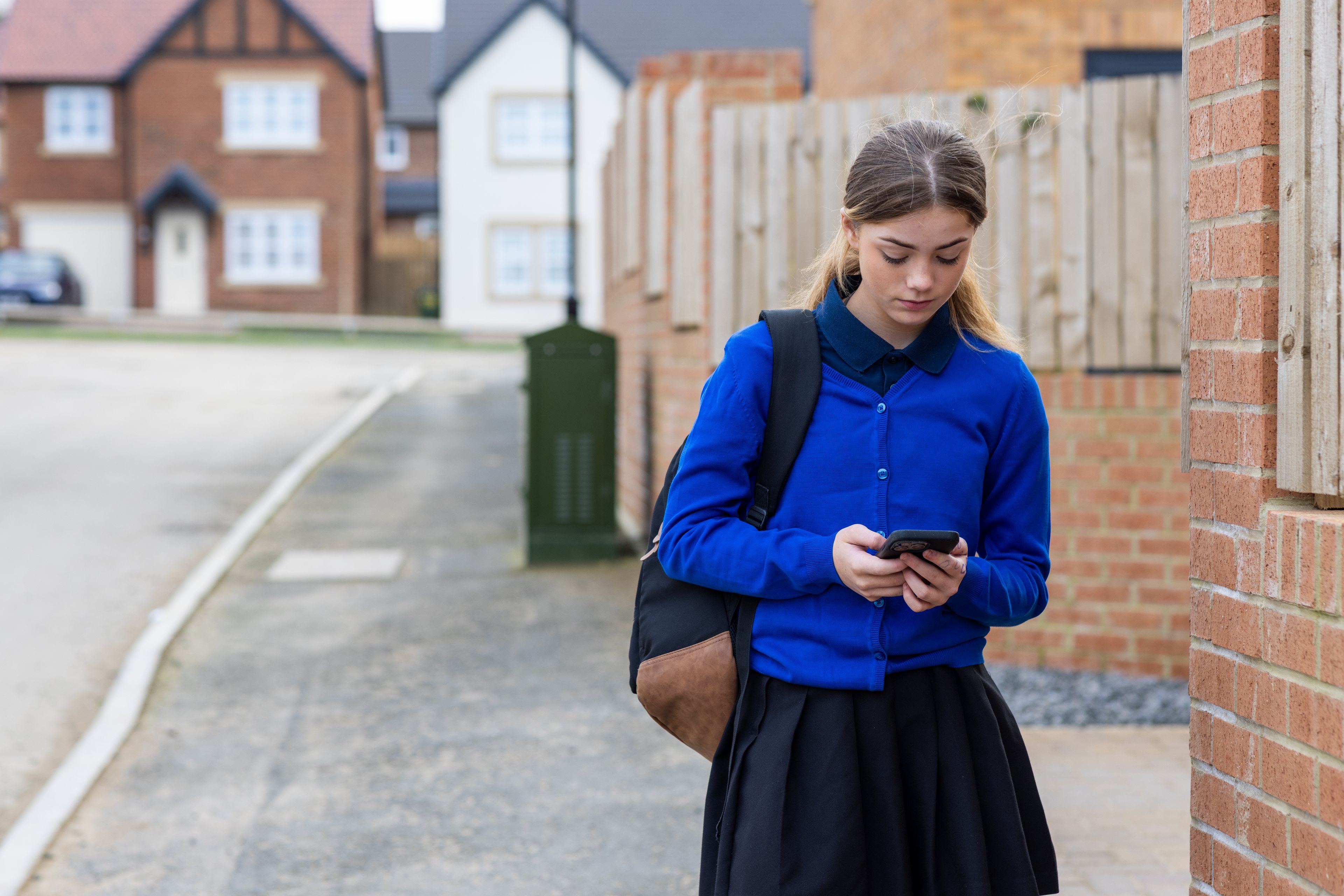
For a growing number of UK families, getting a child to school in the morning has become increasingly difficult. Children may experience stomach aches, become distressed at the school gates, or find it hard to leave the house at all. Parents often face strained conversations with school, sometimes without agreement between partners about the right approach.
If this is your family's experience, this guide is intended to help. It covers what Emotionally Based School Avoidance (EBSA) is, why the pattern can become entrenched, what the evidence suggests helps and what doesn't, how to work constructively with school, and where counselling may have a role.
What is EBSA?
Emotionally Based School Avoidance describes the experience of a child or young person who finds it extremely difficult to attend school due to emotional distress. It’s not about laziness, defiance, or bad behaviour. It’s about anxiety, fear, sensory overload, or overwhelm that has become so strong that going to school feels genuinely impossible.
EBSA can develop gradually. For some children it starts with frequent complaints of headaches or stomach aches on school mornings, then occasional missed days, then increasing distress, and eventually sustained non-attendance. For some families, it escalates suddenly after a specific event: an illness, a friendship breakdown, a transition to secondary school, or a return after a holiday. For others, it builds slowly over months in a way that's hard to put a finger on.
The same underlying difficulty has been called many things: school refusal, school phobia, anxiety-related non-attendance, and, more recently, Extended School Non-Attendance (ESNA). We tend to use EBSA because it's widely used in UK schools at the moment, but we strongly support the move towards ESNA because it removes the implicit blame of words like "refusal" and "avoidance". Whatever terminology is used, the focus is on understanding why attending school has become difficult for that particular child.
How common is EBSA?
School absence has risen sharply since the COVID-19 pandemic, and not all of it is EBSA. The Department for Education's data on persistent and severe absence shows a substantial increase in pupils missing significant amounts of school in the post-pandemic period, with persistent absence (missing 10% or more of school) affecting almost one in four secondary pupils in 2024/25.[1] Many young people with EBSA have anxiety, depression, autism, or other needs that haven't yet been picked up.
NHS referrals of under-18s for anxiety more than doubled in four years, from around 99,000 in 2019/20 to over 204,000 in 2023/24, although more NHS services were sending in data by the end of that period.
Nuttall and Woods (2013) describe what helped in two UK case studies of teenage girls with school refusal, published in Educational Psychology in Practice[3]. EBSA is not a fringe issue, and it is a growing concern for many UK schools.

The EBSA cycle
One helpful way to understand EBSA is as a self-reinforcing cycle. It will not describe every child exactly, but for many young people it goes something like this.
A young person experiences anxiety about school. They avoid attending. Their anxiety drops sharply, which creates short-term relief. That short-term relief can reinforce avoidance, and the next morning the anxiety may be higher. They avoid again. Relief again. Over weeks and months, the cycle can tighten. The young person becomes more anxious about school, more avoidant, and over time, more anxious about anything that resembles school: leaving the house, seeing peers, doing schoolwork at home, anything that reminds them of the threat.
This is one reason pushing harder rarely works. The young person is not being difficult. They may have come to experience school as genuinely unsafe. Arguments, sanctions and ultimatums can increase your child's distress and make it harder for them to engage. It can help more to agree a plan together with school, so everyone is working in the same direction.
The work, slowly, is to interrupt the cycle: to make school feel manageable enough, in small enough steps, that it gradually starts to feel less threatening. Done carefully, at the young person's pace, it can help. Rushed, it can make things worse.
What EBSA looks like
Signs of EBSA can be different for each child, but common indicators include:
- Frequent physical complaints (headaches, stomach aches, nausea) on school mornings.
- Sudden or ongoing emotional outbursts before or after school.
- Withdrawal or shutdown when school is mentioned.
- Sleep difficulties or changes in appetite.
- Avoidance of friends, homework, or anything related to school.
- Increased anxiety or irritability on Sunday evenings, the morning of school, or after school holidays.
- Becoming visibly fine at weekends but unable to leave the house on school days.
- A pattern of attending occasional days followed by longer absences.
Sometimes the signs are obvious; sometimes they're subtle. These signs aren't a checklist: a child can be struggling without showing many of them, and some can have other causes. If you're noticing a pattern, it's worth talking with your child and with school.
Why young people develop EBSA
There is rarely a single cause. Common contributing factors include:
- Anxiety: Separation anxiety, generalised anxiety, social anxiety, panic. Our pages on anxiety, social anxiety and panic attacks cover each of these.
- Bullying or friendship difficulties: Can be the trigger, and may not be disclosed by the young person. Read our page on bullying.
- Sensory overwhelm: Particularly in Autistic young people, the cumulative sensory load of school can genuinely feel too much. Read more about Autism.
- Learning difficulties: A child struggling academically without recognition or support may retreat into avoidance as a way to manage what feels like daily failure.
- Neurodivergence: When autism, ADHD or both are undiagnosed or unsupported, the cumulative demand of masking and the sensory load of school can build into EBSA. The difficulty lies in the mismatch with school, not in being neurodivergent. Our pages on Autism and ADHD cover this.
- Trauma or adverse experiences: Past trauma, particularly involving school, peers, or transitions, can leave a young person more likely to experience school as unsafe. Our trauma page covers this.
- Mental health difficulties: Depression, OCD, eating issues, or body image difficulties can all produce school avoidance as a secondary feature.
- Sometimes, the school itself: A school environment that genuinely is not safe or supportive for a particular child needs addressing, not adjusting the child to fit it.
In practice, EBSA often involves several of these factors at once. Identifying which ones are operating is part of the work.
7x
more likely to miss over 15 school days in a term, for any reason: 8 to 16 year olds in England with a probable mental disorder, compared with those unlikely to have one (11.2% vs 1.5%, autumn 2022)
EBSA and neurodivergence
Young people with additional needs, including autistic young people, miss more school than their peers, and school refusal can be part of the picture: in one UK study of autistic pupils, it was the most common reason parents gave for absence [5]. This often reflects how well school fits their needs, not the neurotype itself. School demands consistent masking, sensory tolerance, social fluency, and planning and organisation skills (sometimes called executive function) in ways that can ask a great deal of many neurodivergent young people. Some neurodivergent young people with EBSA have been compensating for years and run out of capacity.
The figures bear this out. In the same study, 43% of autistic pupils were persistently absent from school over a single month, counting absence for any reason rather than EBSA specifically, and the Department for Education's own data shows absence climbing steeply with additional needs.[5]

A separate caution: it's easy to label all neurodivergent EBSA as autistic burnout or ADHD overload, and miss a separate mental health condition (depression, anxiety, an eating disorder) that needs its own attention. Both can be true at the same time.
What it's like for parents
Many parents we work with describe a daily morning routine that has become a crisis: the wakings, the persuading, the rising distress, the eventual decision to give in or push through, the guilt about whichever choice was made, and then the rest of the day spent worrying about tomorrow.
You may also be facing real external pressure. Attendance fines from local authorities. Letters and meetings with school. The Department for Education's tightening of attendance enforcement in recent years has made this picture more pressured, not less. You may be feeling judged by other parents, by extended family, or by professionals who don't see the whole picture.
EBSA is very hard for families to navigate, and the structural support around it remains inconsistent.
What to say and what not to say
A few things that tend to help:
- Start with empathy: "This is really hard. I can see how much you don't want to go. Let's think about what might help." This can lower the emotional temperature.
- Be curious about what's underneath: "What's the worst bit?" "What's the moment in the day you most dread?" This is often more useful than "Just go in and try."
- Validate the physical symptoms: Stomach aches and headaches in EBSA are real, not put on, and distress is often the driver. Treat them as you would any other distress signal, and if they're frequent or severe, a GP check is worth it so nothing physical gets missed.
- Be honest with school: Schools can often respond better when parents are open about what's happening at home.
A few things that tend not to help:
- Sanctions and ultimatums: Removing screens, grounding, or threats of consequences often deepen the cycle.
- Attempting logic: "You went on Monday, so you can go today." The cycle doesn't work like that, and the argument can increase anxiety.
- Forced attendance: Dragging a child into school, or having them carried in by staff, can escalate distress and damage the relationship between school and family. It should not be used as a routine response. If things have reached the point where this feels like the only option left, that's the moment to plan together with school and appropriate professionals, such as the local authority attendance team or your GP, rather than to press on.
- Catastrophic framing: Worrying about your child's future is normal but doesn't need to be shared with them daily.
- Comparison. "Your sister managed." "Other children probably don’t want to go in either." This closes down rather than opens up the conversation.
What you can do as a parent
Several things can make a meaningful difference.
Keep mornings predictable and low-stakes: Reduce the number of demands the young person has to meet in the first hour of the day. Lay out clothes the night before. Build calm transitions into the routine.
Be curious about the specific moment of difficulty: EBSA often has a precise pinch point: leaving the house, the school gates, a particular lesson, lunchtime. Identifying it gives you and the school something concrete to work with.
Work collaboratively with school: Many schools want to help. A formal meeting with the SENDCO or pastoral lead, with agreed adjustments (a safe person, a quiet space, permission to leave class quietly, a reduced timetable), can change the picture significantly.
Get the right diagnostic picture: If you suspect anxiety, depression or trauma, or neurodivergent needs such as autism or ADHD that have not been recognised, push for assessment. Understanding what's underneath can make EBSA easier to work on.
Build connection on non-school days: A young person who feels safe, accepted, and loved on weekends may be in a better position to attempt the difficult work of returning to school during the week.
Look at the bigger picture: Sometimes the way forward is a gradual return to the current school with adjustments. Sometimes it's a different school. Sometimes it's an EOTAS (Education Otherwise Than At School) arrangement or alternative provision. None of these are failures.
Look after yourself: Supporting a child with EBSA can be exhausting. Your own support, peer connection with other EBSA parents, and rest matter too.
When to seek professional help
It's worth seeking professional support when EBSA is lasting or getting worse, when your child's distress is significant, when family life has begun to revolve around the school day, or when you have run out of strategies. You don't have to wait for any of these: if you're worried, that's reason enough to ask for help now. Prolonged absence can make re-engaging with school more difficult.[7]
Time out of school adds up over the years. In 2018/19, 84% of pupils who missed no school passed GCSE English and maths, compared with around a third of those who were persistently absent. That is an association rather than proof that any one intervention shifts it, but it is why rebuilding attendance early, and gently, is worth the effort.
If your child is showing signs of significant mental health difficulty alongside the EBSA, the same routes apply. If there are any signs of self-harm or suicidal thinking, contact your GP and ask for an urgent appointment, or call NHS 111. If you believe your child is in immediate danger, call 999 or go to A&E. You can also talk to the Samaritans on 116 123 or Childline on 0800 1111 (for under-19s) at any hour, or text SHOUT to 85258. You don't have to be sure how serious it is to ask for help. Finding Therapy is not a crisis or emergency service.
How counselling helps with EBSA
At Finding Therapy our work is integrative talking therapy. Our counsellors work relationally, building a trusting space with the young person, and drawing on the approaches that suit that particular young person's needs. The therapeutic relationship is an important part of the work, alongside appropriate assessment and interventions.
The three-level meta-analysis by Roest and colleagues of 99 studies on child and adolescent psychotherapy found that the therapeutic relationship is consistently associated with better outcomes.[9] For a young person with EBSA, who has often spent weeks or months feeling misunderstood, criticised, or fought-with, the experience of being seen and accepted by a calm adult can itself be part of the change.
In practice, integrative talking therapy for EBSA typically involves:
- Building safety and trust before any direct work on returning to school.
- Understanding what's underneath. What makes school feel unsafe? What's the specific moment of difficulty? What's the young person actually carrying?
- Working with co-occurring difficulties. Anxiety, depression, trauma, or body image difficulties that are feeding into the EBSA need their own attention, and any neurodivergent needs should shape how the work is done.
- Exploring practical coping tools together. Grounding, breathing, regulation strategies, and small step-by-step planning, chosen with the young person to suit their needs and preferences.
- Liaison with parents and where appropriate with school, so the support around the young person is joined-up.
- Pacing ‘return to school’ work carefully. Pushing this work too fast can be distressing and deepen the cycle. Skilled therapy paces re-entry with the young person rather than against them.
- Counselling for EBSA focuses on your child's wellbeing, helping with the difficulties that are making school feel so hard. Their education matters too, so counselling works alongside school, your GP and any specialist assessment, rather than replacing them, and can support the plans you make together.
A clinical perspective from one of our counsellors
Bethy Richardson, MBACP, a Finding Therapy counsellor with experience in supporting children and young people with EBSA, shares how she works in her sessions:
"As a therapeutic counsellor for children and adults, and a parent to now-adult neurodivergent children, I deeply understand the emotional distress behind Emotionally Based School Avoidance (EBSA) and the maze that SEN children and their families have to navigate."
"This challenge is magnified for autistic and ADHD children, who often face far greater barriers to attendance when school doesn't meet their needs. Bullying can also play a big part in school avoidance for these children."
"Many neurodivergent children also experience big feelings that are hard to manage, and sensory overload, and they can be more vulnerable to exclusion and mental health struggles when their needs are not understood. Punitive discipline, like isolation, shame, or blame, can compound children's distress (and can distress their families too), fostering guilt rather than healing. The British Psychological Society has said that tackling the reasons behind absence, such as poor mental health, is likely to work far better than fines and sanctions. Instead, children need understanding, safety, and emotional attunement. In my experience, what helps are non-punitive, relational tools, emotional co-regulation, and encouragements, that build connection and resilience rather than withdrawal or punishment."
"In my sessions at Finding Therapy, children are free to be themselves, without pressure or judgment, holding the therapeutic space as theirs. Sessions being online often helps, allowing them to engage from the comfort and familiarity of their own home."
"As a therapist who works predominantly with primary-aged children, I use interactive, play-based resources alongside psycho-education, respecting that play is the child’s natural language. By attuning and synchronising with their rhythm, I help them process emotions, explore experiences safely, and discover personalised strategies for regulation. Many of my Finding Therapy colleagues work with EBSA in older children, and will often adopt approaches which incorporate CBT and solution-focused strategies."
"Whatever the age, families often arrive feeling blamed and with a sense of doing something wrong. Together, we reframe the narrative towards understanding, connection, partnership and safety. With a trauma-informed approach, we create a warm space where we foster trust and emotional wellbeing."
"Every child communicates through their behaviour, and we need to listen to them carefully. With the right therapeutic support, heightened anxiety, school avoidance, and big feelings that are hard to manage can be met with compassion and hope. My role is to provide a safe, consistent space where children can feel secure, families can feel heard, and together we can work towards soothing and empowerment."
Why online therapy can suit young people with EBSA
Online therapy can be particularly helpful for young people with EBSA. Many of them are finding it difficult to leave the house at all, and the prospect of attending a clinic for therapy can be a non-starter. Being in their own bedroom, with the camera, lighting, and visual field under their control, can make engagement easier.
For anxiety and depression in children and young people, research suggests therapy delivered through a screen can work about as well as meeting in person.[10] That research was not about EBSA specifically, so treat it as general reassurance about online therapy for young people.
For EBSA specifically, the home setting can also remove a layer of friction that an in-person appointment would impose. Many young people who find traditional therapy hard to engage with can find it easier online. Online counselling isn't right for every situation: where there is a significant risk to safety, a safeguarding concern, or a need for more intensive or specialist assessment, other support may be better.
Recovery: what it can look like
For some young people with EBSA, returning to their current mainstream school may not be the best next step. Decisions like this should be based on an assessment of your child's needs, made with school and the relevant professionals. Other options might include a different school, a flexi-schooling arrangement, Education Otherwise Than At School (EOTAS), alternative provision, or home education, possibly with online tuition support. These routes are not interchangeable, though. They sit on different legal footings, with different decision-makers, funding and responsibilities: home education means you take on full responsibility for providing your child's education, including the cost; EOTAS is arranged by the local authority, usually through an EHC plan, when it is satisfied that provision in a school would be inappropriate; and flexi-schooling needs the school's agreement. If your child attends a special school, or is at school because of a school attendance order, you will need the council's permission before educating them at home. Before deregistering your child or making a big placement decision, it's worth getting free, independent advice from a SEND law charity such as IPSEA.
The aim is for your child to be well, learning, and engaged with life. In England, parents must make sure their child gets a full-time education that meets their needs, at school or otherwise, so any change of setting is worth planning carefully with school and, where needed, the local authority.
These decisions can be contentious. Schools, local authorities, and families don't always agree on the best route forward. IPSEA (Independent Provider of Special Education Advice), a SEND-law charity in England that supports families navigating this process, is a useful reference point.
A final word
If your child has EBSA, it can help to remember that this is not who they are. One helpful way to see it is that a pattern has been learned, and with the right understanding, the right support, and the right pacing, that pattern can often be unlearned. The route back may not look like the one you imagined, but the destination, a well young person engaged in life and learning, is a realistic hope for many young people, even if progress comes with setbacks along the way.
At Finding Therapy, our counsellors are experienced in working with children and young people experiencing EBSA, and with their families. If you'd like to talk to someone experienced in this, browse our directory of children's and young people's counsellors, or if you're not sure who would suit your child, book a free consultation and you'll speak to our Head of Counselling, Helen. You don't need a GP referral.
Frequently asked questions
References
- Department for Education (UK) (2026). Pupil absence in schools in England. https://explore-education-statistics.service.gov.uk/find-statistics/pupil-absence-in-schools-in-england/2024-25 Accessed 20 June 2026. ↩
- NHS England (referrals for anxiety, under-18s) (2024). Referrals to mental health services for anxiety among under 18s, NHS England Digital. https://digital.nhs.uk/supplementary-information/2024/child-referrals-to-mental-health-services-for-anxiety ↩
- Nuttall, C., & Woods, K. (2013). Effective intervention for school refusal behaviour., Educational Psychology in Practice, 29(4), 347-366.. https://doi.org/10.1080/02667363.2013.846848 Accessed 12 June 2026. ↩
- NHS England, Mental Health of Children and Young People (2023). more likely to miss over 15 school days in a term, for any reason: 8 to 16 year olds in England with a probable mental disorder, compared with those unlikely to have one (11.2% vs 1.5%, autumn 2022). https://digital.nhs.uk/data-and-information/publications/statistical/mental-health-of-children-and-young-people-in-england/2023-wave-4-follow-up ↩
- Totsika et al. (2020). Types and correlates of school non-attendance in students with autism spectrum disorders, Autism. https://doi.org/10.1177/1362361320916967 Accessed 17 June 2026. ↩
- Department for Education (2025). Pupil absence in schools in England, 2023/24 (by pupil characteristics), Department for Education. https://explore-education-statistics.service.gov.uk/find-statistics/pupil-absence-in-schools-in-england/2023-24 ↩
- West Sussex Educational Psychology Service (2022). Emotionally Based School Avoidance: Good Practice Guidance for Schools and Support Agencies. https://schools.westsussex.gov.uk/Page/10483 Accessed 12 June 2026. ↩
- Department for Education (the link between absence and attainment) (2022). The link between absence and attainment at KS2 and KS4, 2018/19, Department for Education. https://explore-education-statistics.service.gov.uk/find-statistics/the-link-between-absence-and-attainment-at-ks2-and-ks4/2018-19 ↩
- Roest, J., Welmers-van de Poll, M., Van der Helm, G. H. P., Stams, G. J. J. M., & Hoeve, M. (2022). A Three-Level Meta-Analysis on the Alliance-Outcome Association in Child and Adolescent Psychotherapy., Research on Child and Adolescent Psychopathology. https://link.springer.com/article/10.1007/s10802-022-00986-2 Accessed 12 June 2026. ↩
- Bevilacqua et al. (2024). Effectiveness of technology-assisted vs face-to-face cognitive behavioural therapy for anxiety and depression in children and young people., Clinical Child Psychology and Psychiatry. https://doi.org/10.1177/13591045241259070 Accessed 19 August 2026. ↩


