A panic attack is a frightening experience for a young person, and unnerving to witness, yet it can help to know that it passes. Most teenagers who have one do not have panic disorder (Essau et al., 1999), and panic often responds well to support. This guide covers what a panic attack is, what to do in the moment, and how counselling helps a child stop fearing the next one.
Article summary
Key takeaways
- A panic attack is intensely frightening but not dangerous, and although it can feel endless, it will pass.
- Panic attacks are common in the teenage years, and most young people who have one do not have panic disorder.
- For many young people, a turning point is learning that the physical sensations are uncomfortable rather than dangerous, which can take the fear out of them.
- Avoidance is often what makes panic shrink a young person's world, so a gentle, supported return to feared situations is central to recovery.
- Panic often responds well to therapy, online therapy can suit it well, and progress varies from child to child.
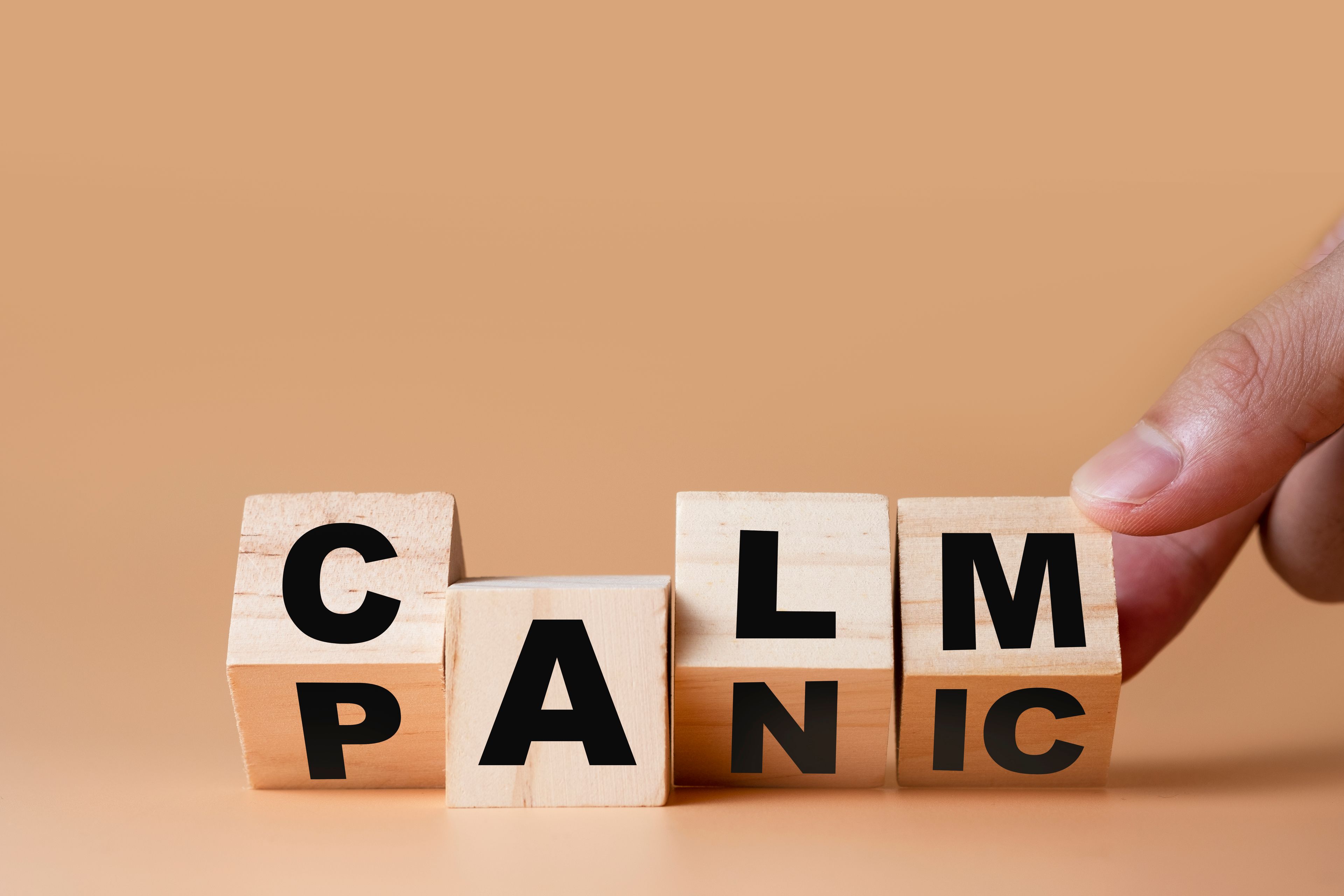
During a panic attack, the heart races, breathing becomes shallow, the world feels unreal, and a child may genuinely believe they are about to die. For a parent watching, it can be really unnerving, and the impulse to fix it is overwhelming. Many parents end up calling 999 or taking their child to A&E, believing something serious is happening.
This guide is for parents whose child has had one panic attack, or several, or who lives in fear of the next one. It covers what a panic attack actually is, what is happening in the body, how to respond in the moment, what helps in the longer term, and when and how to get specialist support. For the wider picture of childhood anxiety, our guide to anxiety is the place to start.
What is a panic attack?
A panic attack is a sudden, intense surge of fear or discomfort, accompanied by strong physical symptoms, that usually builds quickly to a peak and then eases, although it can feel much longer. A panic attack is not dangerous in itself, but it feels it, which is part of why it is so distressing.
Common symptoms include a racing or pounding heart, shortness of breath or feeling smothered, chest tightness, dizziness, sweating, trembling, numbness or tingling in the hands and face, nausea, hot flushes or chills, and a feeling of unreality (often described as "everything went strange"). Many young people also report an overwhelming sense of doom and a powerful urge to escape.
The World Health Organization's diagnostic manual describes panic attacks as discrete episodes of intense fear or apprehension, with several symptoms, such as a racing heart, sweating, trembling or shortness of breath, coming on quickly and together [1]. The key word is discrete. A panic attack has a beginning, a peak, and an end. This matters because it can help a young person to know that, however intense a panic attack feels, it will pass.
Panic attacks can be expected (triggered by a specific situation) or unexpected (out of the blue). Both are common. The unexpected ones tend to be the most frightening, because there is no obvious cause to point to.
What is panic disorder?
A single panic attack is not panic disorder. Many young people have a panic attack at some point, particularly under exam stress, after illness, or during a period of intense change, and never have another. Panic attacks are common in adolescence: in one German study of around 1,000 teenagers, about one in six (18%) reported having had at least one [2].
Panic disorder is the recognised clinical condition that develops when panic attacks become recurrent and the young person begins to worry significantly about having more of them. It often involves repeated panic attacks that seem to come out of the blue, ongoing worry about having more, and avoiding situations to try to prevent them. Crucially, it is far less common than panic attacks themselves: a large US survey estimated that 2 to 3% of 13 to 18 year olds have had panic disorder at some point [3].

The avoidance is often where panic disorder begins to constrain a young person's life: not going to school, not getting on the bus, not going into shops, or being afraid to leave the house.
The biology: what is actually happening in the body?
One helpful way to understand a panic attack is as the body's fight-or-flight response firing, even in the absence of an actual threat. Parts of the brain involved in spotting danger set off the body's stress response, and adrenaline is released into the bloodstream. The heart speeds up to pump more oxygenated blood to the muscles. Breathing becomes shallow and rapid. Blood is shunted from the extremities to the core. When the cause is panic, none of it is doing the body any harm, which is an important thing for a frightened young person to hear.
In a true emergency this is a brilliant system. The same physiological response is what gets a person out of the way of an oncoming car. The problem with a panic attack is that the response is firing in the absence of a real threat: in a shop, in a classroom, at the dinner table. None of it is dangerous, and a surge like this doesn't last, which is why panic attacks pass.
The role of catastrophic misinterpretation
A key idea in understanding panic is the role of catastrophic misinterpretation. The seminal cognitive model of panic, set out in Clark's 1986 paper, describes how the cycle is maintained: a normal physical sensation (a slight racing of the heart, a flutter in the chest) is misinterpreted as catastrophic ("I'm having a heart attack"), the catastrophic thought produces more adrenaline, the symptoms intensify, the misinterpretation is reinforced, and the attack spirals [4]. Many effective treatments for panic target this cycle directly.
An initial physical sensation is misinterpreted as catastrophic; the catastrophic thought drives more adrenaline; the symptoms intensify, the misinterpretation is reinforced, and the attack spirals.
This is why simply reassuring a young person mid-attack that they are not dying often does not work. In the middle of an attack, with adrenaline running high, a young person may have much less access to calm, rational thinking. What often helps, in the moment and over time, is helping the young person learn that the sensations of panic themselves are not dangerous.
Common triggers and risk factors
There is rarely one single cause of a young person's panic attacks. Some things can set off an attack in the moment (triggers), while others are linked with panic or can make it more likely over time (risk factors). Common ones include:
- Recent illness. Particularly chest infections or anything that affected breathing; the body becomes hyper-vigilant about chest sensations.
- Sleep deprivation. Tiredness can make the body react more strongly.
- Caffeine. Energy drinks can play a part for some teenagers.
- Cannabis. Particularly high-THC strains, which have been linked with a higher risk of panic and paranoia in young people.
- A history of trauma or significant loss. The nervous system can stay on high alert for the same to happen again.
- High-stakes assessments. GCSEs and A-Levels are a common time for panic attacks to start or return.
- A first panic attack in a specific setting (on the bus, in a shop), after which a young person may come to fear the setting itself.
These are common factors, not a checklist. Every young person is different, and panic can start with no obvious trigger at all.
Many young people who panic also score highly on something called anxiety sensitivity: the tendency to interpret normal physical sensations as dangerous. Therapy for panic often works on this underlying pattern too.
How panic shows up at different ages
True panic attacks are less common in younger children but do happen, and are more often expressed through the body: stomach aches, a racing heart, breathing difficulties, or feeling sick. Younger children may not have the vocabulary to name what they are feeling, and may report a strong urge to escape or to be held tightly.
First panic attacks can emerge in early adolescence, sometimes around the move to secondary school, social pressures or exam stress, and sometimes with no obvious trigger at all. Some young people at this age are very aware of their bodies and can be easily frightened by physical sensations, which can feed the panic cycle.
In older teenagers and young adults (15 and over), panic frequently combines with social anxiety, school avoidance, and the pressures of exams and the move to university or work. Our piece on emotionally based school avoidance covers the territory where panic and school avoidance overlap. In one large US survey, panic disorder was a little more common in girls than in boys, and in older teenagers than in younger ones [3].
How avoidance keeps panic going
If panic disorder is left to develop, avoidance behaviour can become one of the hardest parts of it. Some young people begin to avoid the places they associate with attacks. They stop going to the canteen, then assembly, then school. They stop getting on the bus. The world gets smaller.
When avoidance becomes severe, panic disorder can develop into agoraphobia, the fear of being in places or situations from which escape feels difficult or where help would not be available. Research, mostly in adults, suggests that around a third, and in some studies up to a half, of people with panic disorder also have agoraphobia [5]. Therapy for panic often works on avoidance directly, with carefully graded steps agreed together with the young person, never as a sudden push.
In community samples, a third to a half of people with panic disorder also have agoraphobia.
What it's like for parents
Watching your child have a panic attack is one of the hardest things a parent goes through. The instinct to take them to A&E is rational. The instinct to never let them be in the triggering situation again is also rational. Both can become problematic if they become permanent strategies.
Many parents describe a kind of secondary anxiety of their own: scanning constantly for the next attack, walking on eggshells, and arranging life around the child's avoidance. This is exhausting and entirely understandable. It is also worth noticing, because parental over-accommodation can quietly reinforce the avoidance pattern. The aim, over time, is to stay calm and steady, to validate the fear without confirming its catastrophic content, and to slowly support the young person back into the world they have been retreating from.
What to do during a panic attack
If this is a first attack, or you're not sure it is panic, get medical advice: call NHS 111, or 999 if your child seems seriously unwell. Staying calm and steady yourself can help. Children often pick up on a parent's calm. A few practical things help during an attack:
- Name what is happening. Once you both know these are panic attacks, say calmly: "This is a panic attack. It's uncomfortable but not dangerous. It will pass." Naming it can help ease the catastrophic interpretation.
- Slow the breathing. A long, slow exhale is more useful than a deep inhale. Try breathing out for a count of six or eight; the exhale helps activate the parasympathetic nervous system, which can help calm the body. Avoid encouraging deep, fast breathing, which can intensify hyperventilation.
- Ground the senses. The 5-4-3-2-1 technique helps many young people: name five things you can see, four you can touch, three you can hear, two you can smell, and one you can taste. This brings the mind back into the present.
- Drop the demand. Whatever the young person was supposed to be doing can wait. The job in the moment is to let it pass, not push through it.
- Stay alongside. Sit with them. Quiet presence is often more useful than active reassurance, and avoid asking lots of questions.
- Let it end naturally. A panic attack peaks and subsides on its own. You do not have to fix it.
The aim is for the young person to come out the other side knowing the attack ended, they did not die, and they got through it. Each time this happens, the panic can lose some of its power. Every young person is different, so it can help to agree together, at a calm moment, what helps them most.
What you can do as a parent in the longer term
Beyond the moment of attack, several things can help at home.
- Look at sleep, food and caffeine. Tired bodies panic more easily, and energy drinks can raise the risk.
- Reduce reassurance-seeking. Repeated reassurance often feeds the cycle. Try acknowledging the worry without answering it in detail every time.
- Don't avoid the feared activities. Avoidance reinforces panic; a gradual, supported return to feared situations is often what helps it ease. Agree small steps together, not a sudden push.
- Talk about the biology. Once a GP has checked for anything physical, help the young person understand adrenaline, fight-or-flight, and why the sensations of a panic attack, frightening as they feel, are not causing harm. Understanding what is happening can make it less frightening.
- Model your own regulation. If you breathe slowly and stay grounded, your child learns that this is what nervous systems do under pressure.
- Look after yourself. Supporting a young person with panic can be exhausting. Your own rest and support matter too.
When to seek professional help
A single panic attack doesn't always mean a young person needs professional help, but it is always reasonable to ask. It may be worth seeking help when panic attacks are recurring; when the young person has become significantly afraid of future attacks; when avoidance is starting to constrain their life; when there is significant distress between attacks; or when the attacks are affecting sleep, eating or family life. These are prompts, not a checklist: if you're worried, that is reason enough to talk to your GP. It helps to prepare for a GP appointment by noting recent attacks and how they are affecting daily life; the NHS route usually starts with your GP. Young people aged 18 or over can also refer themselves to NHS Talking Therapies, and for under-18s your GP can refer on to CAMHS.
It is also worth being clear: not every physical symptom is panic. The NHS notes that most panic symptoms can also be caused by other health problems [6], so ask your GP to check your child if they have physical symptoms that are new, unusual or worrying you. If you're not sure whether it's panic, call NHS 111, and call 999 if your child collapses or faints, is struggling to breathe, or seems seriously unwell. The fact that panic attacks mimic medical emergencies is part of what makes them so frightening, and a GP visit to rule out anything physical can itself be reassuring.
How counselling helps with panic
Panic often responds well to therapy. NICE guidance on panic, which is written for adults, recommends psychological therapy as one of its main treatments, starting with guided self-help for milder panic. It puts a full course of CBT at 7 to 14 hours in total, usually spread over weekly sessions [7].
A good counsellor selects and adapts the approach to the young person rather than applying a single protocol. An integrative approach draws on grounding techniques that focus on the body to settle the body's alarm in real time, exploration of what may be feeding the panic, and the safe, calm relationship of counselling itself, in which a young person can practise staying with uncomfortable sensations rather than fleeing them. Cognitive behavioural techniques, the most-tested approach for panic in adult research, are one part of that toolkit, working directly on the cycle of catastrophic thoughts. Across different types of therapy, the bond between a young person and their counsellor is consistently associated with better outcomes [8]. Counselling is what we offer, and it does not replace a GP check or NHS care where those are needed.
In a controlled trial of adults with panic disorder, 74% were panic-free at the end of a course of CBT, and 89% a year later. That trial was in adults, so it's not a promise about any particular child, but it does show how treatable panic can be[9].

Those are trial figures, and everyday results in busy NHS services are more modest. But the direction is hopeful: with the right help, many young people find panic loosens its hold, though progress varies and there can be setbacks.
A clinical perspective from one of our counsellors
Val Finn, MBACP, a Finding Therapy counsellor with experience in panic and anxiety in young people, shares how she works in her sessions:
"Most of the young people who come to me with panic have been frightened by their own bodies for weeks or months by the time we meet. So the first thing we do is take the mystery out of it. I explain what is happening biologically, why the symptoms feel so dramatic, and why the body cannot sustain a panic attack indefinitely. For many young people, this conversation can help take some of the intensity out of the next attack."
"From there, we work on practical tools: slow exhale breathing, grounding, and a careful look at the catastrophic thoughts the brain is producing mid-attack. The Finding Therapy platform's interactive boards are particularly useful here for plotting the panic cycle visually, which helps the young person see the pattern from the outside. Once they understand it, they can start to interrupt it."
"With panic specifically, improvements can come quite quickly for some young people, though every young person's pace is different. Often, the young person becomes less frightened of the next attack, the avoidance starts to unwind, and the world expands again. It is one of the most rewarding kinds of work I do."
Why online therapy is well-suited to young people with panic
Online therapy can be a particularly good fit for panic. The familiar home environment can make it easier to get to a session, a real factor when the young person has been avoiding leaving the house. Sessions can include practical breathing and grounding work done from a known, safe space.
For anxiety and depression in children and young people, research suggests therapy delivered through a screen can work about as well as meeting in person [10]. That research looked at anxiety and depression broadly, rather than panic on its own. For young people at the agoraphobic end of panic disorder, where leaving the house is itself a trigger, online therapy can be the first step that makes treatment possible at all. Online counselling isn't right for every situation: where there is a significant risk to safety, a safeguarding concern, or a need for more intensive or specialist assessment, other support may be better.
A brief note on medication
Medication is not the main treatment for panic in children and young people. NICE's guidance, which is written for adults, recommends psychological therapy first. SSRIs (a class of antidepressant) may be offered to older adolescents when clinically indicated, usually where therapy alone has not helped enough. This is led by a specialist, such as a CAMHS psychiatrist. NHS advice for children with signs of panic disorder is to start with a GP, who can rule out physical causes and may refer your child to a specialist, and the specialist may recommend a course of CBT [6]. We are not able to recommend or prescribe medication. Decisions about it are for you, your child and their doctor, and we work alongside whatever medical pathway your child is on.
Recovery is realistic
Panic often responds well to support. Many young people see real improvement with focused therapy, though progress varies and there can be setbacks along the way. The aim is not that the young person never feels anxious again. The aim is that they understand what panic is, have tools to interrupt it, no longer fear the sensations themselves, and can move through the world without it constraining them.
Many young people come out the other side of a panic episode with a level of understanding of their own nervous system that is genuinely useful for the rest of their life.
A final word
If your child is having panic attacks, it can help to remember that panic often responds well to support, and many young people find things improve. One helpful way to see it is that a protective system designed to keep them safe is firing at the wrong times, and with the right understanding and support it can settle.
At Finding Therapy, our counsellors are experienced in working with panic across a wide range of ages and needs, from a young person with a recent first attack through to teenagers whose lives have shrunk to a single room. You can browse our counselling directory to learn more about our team, or book a free consultation and you’ll speak to our Head of Counselling, Helen, who can talk you through the options.
Frequently asked questions
References
- World Health Organization (2022). ICD-11 for Mortality and Morbidity Statistics: 6B01 Panic disorder, World Health Organization. https://icd.who.int/browse/2025-01/mms/en Accessed 13 October 2026. ↩
- Essau et al. (1999). Frequency of panic attacks and panic disorder in adolescents., Depression and Anxiety. https://pubmed.ncbi.nlm.nih.gov/9989346/ Accessed 16 June 2026. ↩
- Merikangas et al. (2010). Lifetime prevalence of mental disorders in US adolescents (National Comorbidity Survey Replication Adolescent Supplement, NCS-A)., Journal of the American Academy of Child and Adolescent Psychiatry. https://doi.org/10.1016/j.jaac.2010.05.017 Accessed 16 June 2026. ↩
- Clark (1986). A cognitive approach to panic., Behaviour Research and Therapy. https://pubmed.ncbi.nlm.nih.gov/3741311/ Accessed 16 June 2026. ↩
- Baldwin (1998). Depression and panic: comorbidity., European Psychiatry. https://doi.org/10.1016/S0924-9338(98)80016-3 Accessed 16 June 2026. ↩
- NHS (2023). Panic disorder, NHS. https://www.nhs.uk/mental-health/conditions/panic-disorder/ Accessed 13 October 2026. ↩
- NICE (2019). Generalised anxiety disorder and panic disorder in adults: management (CG113)., National Institute for Health and Care Excellence (NICE). https://www.nice.org.uk/guidance/cg113 Accessed 16 June 2026. ↩
- Roest et al. (2022). A three-level meta-analysis on the alliance-outcome association in child and adolescent psychotherapy., Research on Child and Adolescent Psychopathology. https://link.springer.com/article/10.1007/s10802-022-00986-2 Accessed 16 June 2026. ↩
- Ost and Westling (1995). Applied relaxation vs cognitive behavior therapy in the treatment of panic disorder (38 adult outpatients)., Behaviour Research and Therapy. https://pubmed.ncbi.nlm.nih.gov/7887873/ Accessed 16 June 2026. ↩
- Bevilacqua et al. (2024). Effectiveness of technology-assisted vs face-to-face cognitive behavioural therapy for anxiety and depression in children and young people., Clinical Child Psychology and Psychiatry. https://doi.org/10.1177/13591045241259070 Accessed 19 August 2026. ↩


