
When a child or teenager seems to have lost all drive, it’s easy to reach for the word lazy. But motivation that has drained away almost always has a reason behind it. Some of the dip is a normal part of growing up. Some points to tiredness, low mood, or too much pressure. This guide helps you work out which you might be seeing, and what genuinely helps a young person's motivation return.
Article summary
Key takeaways
- Low motivation usually has a specific cause, and some loss of drive during the teenage years is completely normal.
- Motivation tends to dip in the teenage years, especially the early teens. Part of the reason may be that the brain’s reward system matures before self-control.
- Low motivation that lasts can be a sign of low mood. In teenagers, depression often shows up as tiredness, low energy, and changes in sleep and appetite.
- Tiredness and a shifted body clock are common, fixable drivers. Most teenagers need about eight to ten hours of sleep and get less.
- Pressure tends to lower motivation, not raise it. Easing demands and supporting a child's own choices is what helps drive return.
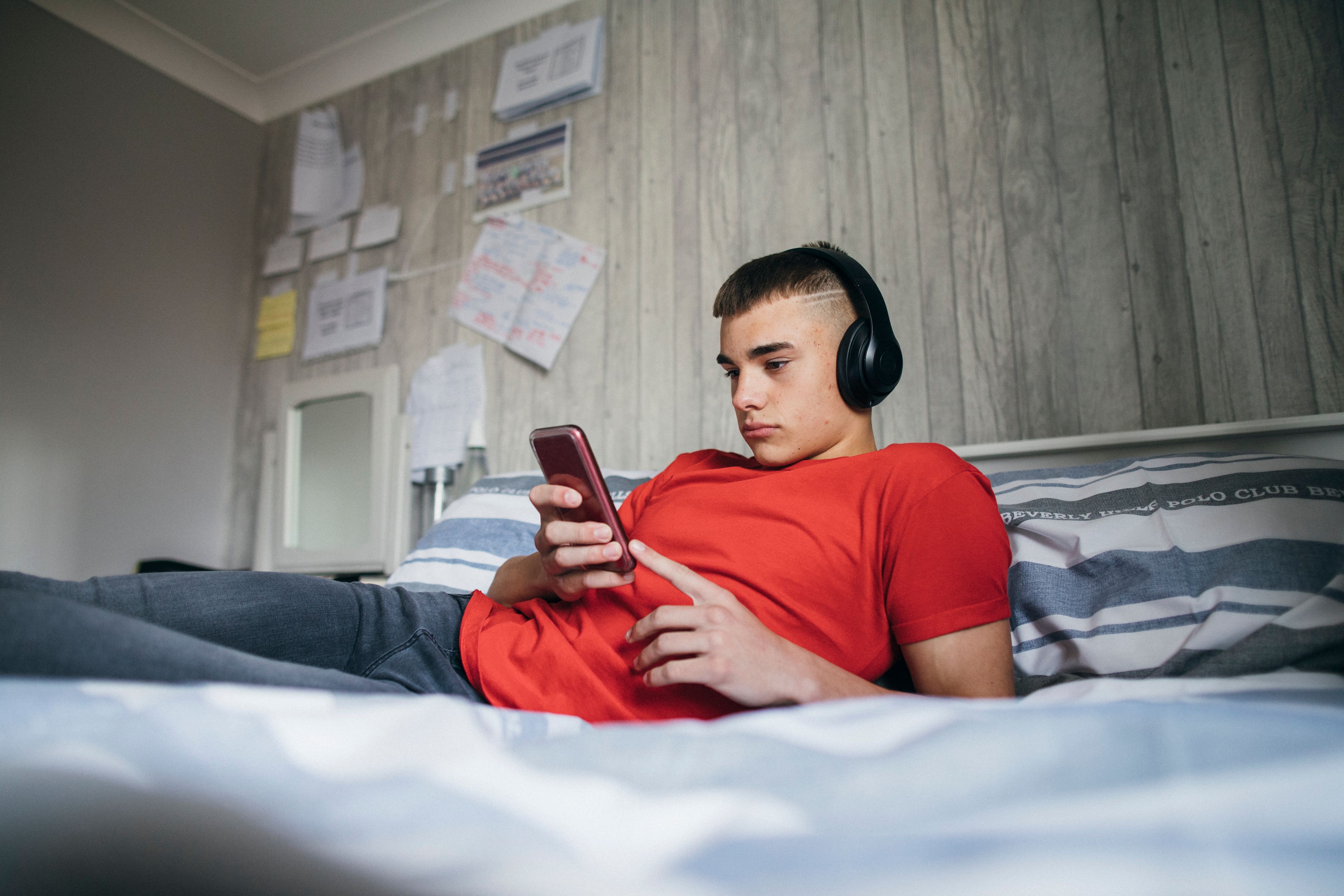
Sometimes a once curious, busy child starts to shrug at everything and stay in bed. They can’t seem to summon the energy to care about school, friends, or the things they used to love, and it can be frightening to watch. It’s one of the most common worries parents bring to us, and one of the most misunderstood.
The instinct, when a child seems to have downed tools, is to push. We worry about their education, their future, and whether we’re letting them get away with something. But there is a real difference between a child who will not and a child who, right now, cannot. Motivation that has vanished is a signal, not a decision, and the first job is to understand what it’s signalling rather than to force it back.
"Unmotivated" is not one thing. It’s a symptom with several possible causes, and the way to help depends entirely on which one you’re looking at. So this guide works through it step by step. We’ll start with the reassuring part, then help you narrow down what might be going on, and finish with what actually helps.
Most of this is normal
A fall in motivation across the school years is one of the most consistent findings in educational research. A large review of the research found a clear decline, especially in the motivation that comes from genuine interest rather than reward [1]. Another found that engagement with school dips most sharply in the early teenage years and around the moves between schools [2]. So if your twelve or thirteen year old has gone a bit flat about school, you’re seeing something very common.
Across 107 long-term studies, children’s motivation that comes from genuine interest tended to fall over the school years. It was one of the biggest drops the researchers found.
Part of the reason sits in the developing brain. In the teenage years, the parts that respond to reward and excitement mature earlier than the parts that handle planning, patience, and self control [3]. That can help explain why a teenager will happily spend hours on a game or a group chat but cannot face twenty minutes of homework. The imbalance is strongest in the early teens, and for most young people it steadily evens out as they grow [4]. It explains a tendency, not everything.
Why it happens
Normal developmental dip aside, a bigger or more sudden loss of motivation usually has a driver you can name. It helps to run through the common ones:
- A normal teenage dip, most likely if the change is gradual, mild, and mostly about school rather than everything.
- Tiredness and the body clock, if they’re exhausted, hard to wake, and running on too little sleep.
- Too much pressure, if motivation has fallen as expectations, workload, or conflict at home have risen.
- Low mood or depression, if they’re pulling away from friends, hobbies, and things they used to enjoy, and it seems to be settling in rather than passing.
- Burnout, if they’ve gone from coping to barely functioning after a long stretch of stress or masking. Our guide to burnout in children and young people covers this in depth.
- The way an ADHD or autistic brain handles motivation, which is genuinely different and easily mistaken for not trying.
One simple question is often the most useful: did this come on gradually, or fairly suddenly? A slow drift is more likely to be an ordinary dip. A clear change, a child who was managing and then quite quickly was not, is more of a flag, and worth taking seriously. The sections below take the most important causes in turn.
Low motivation or low mood
The possibility that worries many parents is depression, and it’s easy to miss. In young people, depression often looks different from the tearful sadness many of us picture. Compared with adults, it more often shows up as low energy, tiredness, and changes in sleep and appetite [5]. From the outside, that can easily be mistaken for not trying.
Compared with adults, teenagers with depression more often had physical symptoms: low energy, and changes in sleep, appetite and weight.
Losing interest and drive is a core feature of depression, and low mood can reduce a person’s willingness to put in effort, even for something they want [6]. Mental health difficulties are also common: in 2023, around one in five children aged eight to sixteen in England were likely to have one [7].
If the flatness has reached into friendships and old interests, and seems to be settling in rather than passing, it’s worth treating as more than a phase. That’s especially true if it comes with withdrawal, irritability or a sense of hopelessness. Our guide to depression in children and young people goes through the signs in more detail.
Sleep and the teenage body clock
One of the most common and most fixable causes hides in plain sight. At puberty, the body clock shifts later, so teenagers genuinely do not feel sleepy until well into the evening, yet school still starts early. The result is a chronic sleep debt, and its effects land squarely on mood, energy, and the will to do anything [8]. Poor sleep quality is linked with lower mood and less daytime alertness, which is a fairly direct route to a young person who can’t get going [9].
Most teenagers need somewhere around eight to ten hours a night, and a great many are running on far less.

Screens play a part in that lost sleep. In one study, teenagers who were sleepy during the day tended to use a phone at bedtime on more nights of the week [10]. Before looking into anything more complex, it’s worth asking whether they’re exhausted. Protecting sleep is one of the most valuable things you can do for your child.
The impact of pressure
When motivation drops, the natural response is more pressure: more reminders, more consequences, more sitting over the homework. Yet decades of research point the other way. Children tend to have less drive of their own when parents lead with control and pressure, and more when parents support their sense of choice [11]. Supporting that sense of choice doesn’t mean stepping back or dropping all structure. It means offering real choices, explaining the reasons behind things, and showing you believe they are capable [12].
When parents lead with control and pressure, children tend to do things more because they have to and less because they want to. Supporting a child’s sense of choice does the opposite.
Pressure and low motivation can feed each other. A child who seems unmotivated tends to draw more control from a worried parent, and more control can lower their drive further [12]. Stepping out of that loop can help a great deal. It also matters where you loosen your grip. Control over the big things, like their future and who they are becoming, is more strongly linked with lost motivation than control over small daily tasks [13]. Hold any firm lines on the small stuff, and give them room on the big stuff.
What actually helps
The goal is to lower the pressure and rebuild the conditions in which a child's own motivation can return. None of this is quick, but it is doable.
Choose your battles and drop what you can. In a stretched week everything feels essential, but it is not. Ease off the non essential demands, the extra chores, the optional commitments, and protect a bit of genuinely low pressure time. Every demand you take away is energy handed back.
Let your calm do some of the work. One way of understanding this is that a child in a low or overwhelmed state can borrow calm from the adults around them. If you can slow your own pace and keep your tone warm even when you’re worried, you give them something steady to settle against. Rushing and anxiety can rub off on them in the same way.
Start smaller than feels reasonable, and let ‘doing’ come before ‘feeling’. Waiting to feel motivated rarely works, especially for a low child. Action tends to come first, and the motivation follows, which is the principle behind behavioural activation, an approach to low mood with growing evidence in young people [14]. Aim for a step so small it is almost silly: getting dressed, a ten minute walk, one question of homework. Then notice it.
Celebrate small wins. Getting out of pyjamas, eating at the table, picking up an old hobby: these can be signs that energy is starting to return. They’re worth naming warmly rather than skipping past on the way to the next demand.
Problem solve together, when things are calm. Not in the heat of a school morning. At a quiet moment, you might say something like, ‘I’ve noticed mornings have been really hard lately, what do you think the trickiest part is?’ Then listen more than you fix. A child who feels you’re on their side, working with them rather than against them, has far more to draw on.
Protect sleep. Given how much of low motivation traces back to tiredness, a calmer wind down and getting the phone out of the bedroom overnight can do more than any pep talk. Frame it as looking after their energy, not as a punishment, and if you can, agree it together.
“When a parent brings me a child who seems to have given up, they're usually worn out from pushing, and so is the child. The first thing we do is take some pressure off, not pile more on. Motivation is not something you can force back into a young person; it grows when they feel understood and have a bit of room to breathe. Once they feel safe and genuinely listened to, their own reasons for trying tend to come back.”
 Samantha TaittNCPS (Accred), Finding TherapyView profile
When to get help
Most dips in motivation ease with time, rest, and a lighter touch at home. Consider getting support if the flatness seems to be settling in rather than passing, or is there most of the time across different parts of their life. The same goes if they’re withdrawing from friends and the things they loved, or if nothing shifts however much you ease the pressure. You don’t need to wait for a crisis: if you’re worried, that is reason enough to ask for help.
A good place to start is your GP, or the school SENDCO, who can look at adjustments and, where needed, a route into NHS support. Because low motivation so often coincides with other things, our guides to anxiety, low self-esteem, emotionally based school avoidance and burnout may help you see the fuller picture.
If your child talks about not wanting to be here, take it seriously. Finding Therapy is not a crisis or emergency service. If you believe your child is in immediate danger, call 999 or go to A&E. If you’re worried about their safety, contact your GP and ask for an urgent appointment, or call NHS 111 and choose the mental health option. You don’t have to be sure how serious it is before asking for help. If you’re unsure, call NHS 111.
Your child can also talk to Childline on 0800 1111, call Samaritans on 116 123, or text SHOUT to 85258.
It’s hard to watch a child you love lose their spark, and harder still to resist the urge to push it back into them. But motivation is not something you can force from the outside. It grows in the conditions around them: enough rest, less pressure, and the steady sense that their family’s in their corner. With those things in place, the spark often finds its own way back.
Talking therapy can help too, both to lift a young person’s mood and to understand what drained their motivation in the first place. At Finding Therapy, you can browse our counsellors and choose someone for your child yourself. We’ve vetted every one of them, and we’ve known them for years.
If you’d like help choosing, you can book a free consultation with Helen Spiers, our Head of Counselling. We’re a private, paid service with no GP referral needed and currently no waiting list, and we work with children and young people aged 6 to 25.
Frequently asked questions
References
- Scherrer and Preckel (2019). Development of Motivational Variables and Self-Esteem During the School Career: A Meta-Analysis of Longitudinal Studies., Review of Educational Research. https://doi.org/10.3102/0034654318819127 Accessed 3 July 2026. ↩
- Symonds et al. (2026). Student engagement declines across adolescence: A meta-analysis of longitudinal studies., Review of Education. https://doi.org/10.1002/rev3.70134 Accessed 3 July 2026. ↩
- Casey et al. (2008). The adolescent brain., Developmental Review. https://doi.org/10.1016/j.dr.2007.08.003 Accessed 3 July 2026. ↩
- Lozano Wun et al. (2025). Within-person imbalance of reward sensitivity and executive functioning across adolescent development., Developmental Psychology. https://doi.org/10.1037/dev0001969 Accessed 3 July 2026. ↩
- Rice et al. (2019). Adolescent and adult differences in major depression symptom profiles., Journal of Affective Disorders. https://doi.org/10.1016/j.jad.2018.09.015 Accessed 3 July 2026. ↩
- Horne et al. (2021). Depression and the willingness to expend cognitive and physical effort for rewards: A systematic review., Clinical Psychology Review. https://doi.org/10.1016/j.cpr.2021.102065 Accessed 3 July 2026. ↩
- NHS Digital (2023). Mental Health of Children and Young People in England 2023., NHS Digital. https://digital.nhs.uk/data-and-information/publications/statistical/mental-health-of-children-and-young-people-in-england/2023-wave-4-follow-up Accessed 3 July 2026. ↩
- Owens (2014). Insufficient Sleep in Adolescents and Young Adults: An Update on Causes and Consequences., Pediatrics. https://doi.org/10.1542/peds.2014-1696 Accessed 3 July 2026. ↩
- Short et al. (2013). The impact of sleep on adolescent depressed mood, alertness and academic performance., Journal of Adolescence. https://doi.org/10.1016/j.adolescence.2013.08.007 Accessed 3 July 2026. ↩
- Perez-Chada et al. (2023). Screen use, sleep duration, daytime somnolence, and academic failure in school-aged adolescents., PLOS ONE. https://doi.org/10.1371/journal.pone.0281379 Accessed 3 July 2026. ↩
- Deci et al. (1993). The relation of mothers' controlling vocalizations to children's intrinsic motivation., Journal of Experimental Child Psychology. https://doi.org/10.1006/jecp.1993.1008 Accessed 3 July 2026. ↩
- Grolnick (2009). The role of parents in facilitating autonomous self-regulation for education., Theory and Research in Education. https://doi.org/10.1177/1477878509104321 Accessed 3 July 2026. ↩
- Seo et al. (2025). Parental Behavioral Control and Student Motivation: Why Control Over Big Dreams vs. Daily Tasks Matters., Journal of Child and Family Studies. https://doi.org/10.1007/s10826-025-03104-0 Accessed 3 July 2026. ↩
- Watson et al. (2020). A qualitative study exploring adolescents' experience of brief behavioural activation for depression and its impact on the symptom of anhedonia., Psychology and Psychotherapy. https://doi.org/10.1111/papt.12307 Accessed 3 July 2026. ↩