
Emotionally based school avoidance (EBSA) is when a child feels such intense anxiety about school that attendance becomes impossible. It often shows up as stomach aches, sleep problems, meltdowns or shutdowns, and the move to secondary school in Year 7 can be a particular pressure point. Neurodivergent children are particularly susceptible, and a day of masking can lead to burnout, an after-school collapse, and eventually a shutdown that signals school no longer feels safe.
Article summary
Key takeaways
- Starting secondary school is one of the most common times EBSA appears: a new building, new teachers, a bigger crowd and a longer journey, all at once.
- EBSA is often driven by anxiety, not defiance. Many children want to go, but school has come to feel unsafe to them.
- For neurodivergent children it’s often linked to masking and burnout: holding it together all day and collapsing at home, until school feels impossible.
- Small, practical changes help most. A calm home, a soft landing at school, a trusted adult and reasonable adjustments do more than pressure or sanctions.
- With the right support at the right pace, children recover and rebuild their confidence. You don’t have to do this alone.
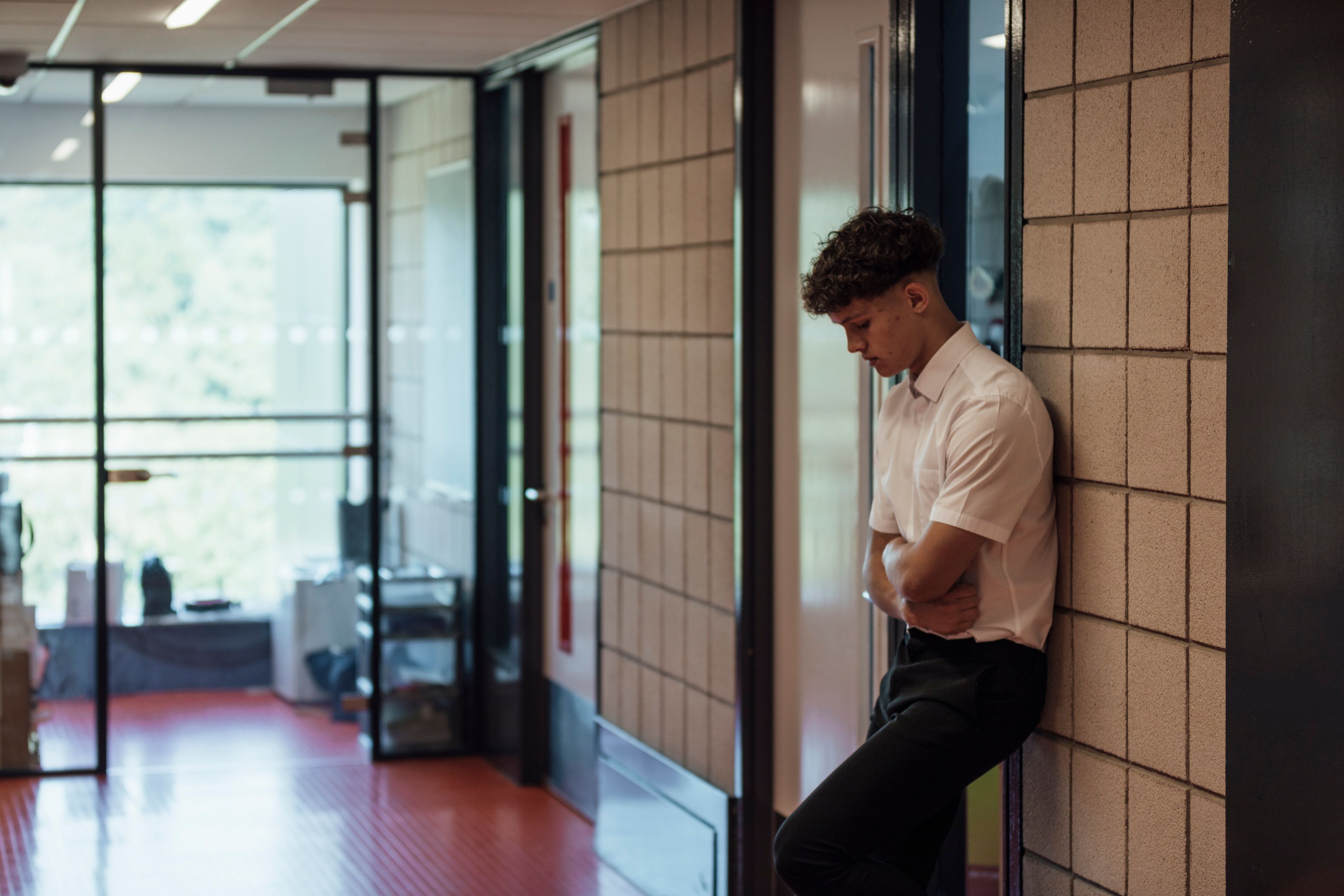
As a new school year begins, many children look forward to fresh starts and seeing friends. But for some, the return to school, or the start of a brand new school, stirs up very different feelings. Instead of excitement, they may feel overwhelmed, or even frightened, about walking back through the gates. If your child has just started secondary school, you might be seeing one of the most common and most misunderstood struggles in UK family life right now.
This can be a confusing and exhausting time for parents, especially when the distress becomes so intense that your child simply cannot attend. Whether this is a new struggle following the move to secondary school or a longer-standing one, understanding what is happening underneath makes it easier to help. You can find the full breakdown of the signs and definitions on our EBSA page; this post is about the emotional toll of the transition and of 'masking', and the practical things that genuinely help.
Why the move to secondary school is such a pressure point
The jump from primary to secondary is one of the biggest changes of childhood, and it lands all at once. In primary school, a child usually has one classroom, one main teacher who knows them well, and a small familiar group of faces. On the first day of Year 7, almost all of that changes: a much bigger building to navigate, a different teacher for every subject, a timetable and the right kit for each lesson, an older and larger crowd in the corridors, and often a longer journey. For many children, all of this arrives at the same time as the early changes brought by puberty.
Most children manage these challenges, but a significant number find the first weeks and months genuinely hard.
In a survey of more than 2,000 children in Wales, around a third said they were worried about moving up to secondary school. Two thirds were looking forward to it, and many children felt both at once.
Missing school is markedly more common once children reach secondary, and large studies find that children's wellbeing tends to dip across the early secondary years, most sharply in how they feel about school and friendships.

If your child is struggling with the move, they’re not unusual and they’re not behind. Common threads at this age include worry about friendships as old groups scatter, feeling unsafe or intimidated in a much bigger school, sensory overload in noisy corridors and canteens, and the ordinary anxiety and social anxiety that become more prominent in the teenage years. Sometimes bullying is part of the picture, and sometimes the panic feels physical, closer to a panic attack.
What is EBSA?
EBSA (emotionally based school avoidance) is when a child finds it extremely difficult to attend school because of emotional distress. It’s not the same as playing truant or being defiant. In fact, many children experiencing EBSA want to be in school, but their anxiety has become too overwhelming to manage.
The term EBSA is now used instead of 'school refusal' to make clear this is not a behavioural choice, and some go further still, to ENAS (extended non-attendance in school) or EBSNA (emotionally based school non-attendance). For some the struggle starts at the school gates; for others, even leaving the house feels impossible. At its heart, this is an emotional struggle, not bad behaviour.
Common signs
EBSA can look different in every child, but here are some common signs that your child might be struggling:
- Frequent physical complaints like stomach aches, headaches or nausea, especially on Sunday nights or Monday mornings.
- Significant changes in sleep, or difficulty falling asleep the night before school.
- Old habits returning, such as clinginess or separation anxiety.
- Intense emotional outbursts, or shutting down, when school is mentioned.
One or two hard mornings are part of normal life. It’s the pattern, building over weeks and getting in the way of daily life, that suggests EBSA rather than an ordinary wobble.
Why it happens, and the masking and burnout cycle
There is rarely one single cause. Usually it’s a combination of factors rooted in anxiety: worry about friendships, academic pressure, or separation from home. Whatever the root, your child is showing you that their world feels too difficult to cope with right now. This age matters, too, because early adolescence is when many mental-health difficulties first appear.
1 in 3
mental health conditions have already begun by age 14; the peak age for problems to first appear is about 14 and a half
For neurodivergent children, such as those who are autistic or have ADHD, the sensory demands and unpredictability of a big secondary school can be especially draining, and EBSA is often the final stage of a cycle of 'masking and burnout'.
The masking cycle
- At school: your child may appear fine to their teachers. They’re working incredibly hard to suppress their natural movements (stimming), force eye contact, and mimic social cues to fit in. This is masking, and it uses an enormous amount of cognitive and emotional energy.
- The school-to-home transition: this is sometimes likened to a bottle of fizzy drink that has been shaken all day, with the pressure building. When they reach the psychologically safe environment of home, the lid comes off. This often looks like 'after-school restraint collapse': intense meltdowns, irritability, or total withdrawal.
- The shutdown: one way of understanding this stage is that a child can no longer recover overnight. The thought of repeating that performance the next day can set off a flight or freeze response. When your child says they 'can't' go to school, they’re not being defiant. It may be their way of saying school has become too physically and mentally draining to manage.
Understanding this cycle matters, because pushing harder rarely works. It’s also why a wobble at secondary school is often a signal to look at what the environment is asking of a child.
In a study of more than 11,000 UK children, wellbeing at 14 was substantially lower on average than it had been at 11, with the steepest declines in how they felt about school and friendships.
How to support your child at home
While every situation is different, these approaches can help lower the temperature at home:
- Stay compassionate. As hard as it feels, try to avoid power struggles in the morning. Let your child know you believe them and that you’re on their side.
- Listen first. Give them space to talk without jumping straight to solutions. Sometimes the best conversations happen while driving or doing an activity together.
- Maintain a gentle structure. Keep a predictable routine at home, even when school is not happening. Consistent mealtimes and bedtimes help a child feel safe.
- Focus on small wins. Celebrate the tiny steps. For some children, simply putting on their uniform is a real achievement.
Working with the school
One of the most stressful parts of EBSA is feeling caught in the middle, between your child's distress and the school's attendance policies. It helps to move the conversation away from attendance and toward accessibility. Under the Equality Act, schools must make reasonable adjustments for disabled pupils, and a mental health difficulty with a substantial, long-term effect on daily life can meet that definition. When you meet with the school, try asking for these specific, low-pressure changes:
- A 'soft landing'. Avoid the chaos of the main gates. Ask if your child can come in through a quieter side door, or arrive ten minutes later to miss the noise and crowds of the playground.
- A safe person and a safe space. Identify one trusted adult, perhaps a favourite teacher or a pastoral lead, who can meet your child at the door. Ask for a 'time out' card so they can go to a pre-agreed quiet space if panic or sensory overload builds, without having to explain themselves.
- Flexibility with uniform. For children with sensory sensitivities, a stiff blazer or scratchy trousers can be a real barrier. Ask whether they can wear a softer version, or PE kit, on difficult days.
- A modified timetable. It doesn’t have to be all or nothing. Could they attend just their favourite subjects for a week, or start with one-to-one sessions in a quiet room before moving back to the full classroom? Any reduced timetable should be formally agreed with the school, kept under review, and treated as a short-term step on the way back to full-time education rather than a permanent arrangement.
By focusing on these small, manageable wins, you show your child that the world can be adapted to fit them, rather than forcing them to break themselves to fit the world.
If you’re not sure how to approach the school, you could open an email like this: "We’re currently seeing significant emotional distress around school attendance. We believe this is EBSA (emotionally based school avoidance), and we would like to meet to discuss a support plan focused on accessibility and reasonable adjustments."
The reality for parents
Parenting a child who can’t face school is isolating. You may feel torn between wanting to protect your child and the pressure of attendance rules. Mornings can become a battleground of frustration, guilt and exhaustion.
Many parents in this position wonder whether they’re being too soft, or whether the school is judging them. EBSA affects the whole family, but with the right understanding you can start to move forward.
How counselling helps
Counselling offers a safe, neutral space away from the pressures of school and home. It’s not about forcing attendance; it’s about helping a child understand their worries and rebuild the sense of safety they need to face school again, at a pace they can manage.
In my sessions at Finding Therapy, children are free to be themselves, without pressure or judgment, holding the therapeutic space as theirs. Sessions being online often helps, allowing them to engage from the comfort and familiarity of their own home.
At Finding Therapy, children and young people aged 6 to 25 can choose from a selection of qualified, experienced counsellors, who can work gently with school avoidance, giving them a consistent space to explore their feelings at their own pace. If a child needs more specialist support, your GP is the place to start. We’re also honest about cost: sessions are £65 for 45 minutes, and there’s currently no waiting list. You can browse our counsellors to find someone who understands EBSA and the move to secondary school.
Final thoughts
The move to secondary school is a genuine milestone, and it’s allowed to be hard. EBSA is a signal that something is not working right now. It’s a difficult path to navigate, but with patience and the right support, children do recover. They rebuild their confidence and feel safe in the world again, sometimes by a different route than you first imagined, but in a way that’s right for them.
Frequently asked questions
References
- Moore et al. (2021). Socio-Economic Status, Mental Health Difficulties and Feelings about Transition to Secondary School among 10-11 Year Olds in Wales., Child Indicators Research. https://doi.org/10.1007/s12187-021-09815-2 ↩
- Department for Education (2025). Pupil absence in schools in England, autumn term 2024/25, Department for Education. https://explore-education-statistics.service.gov.uk/find-statistics/pupil-absence-in-schools-in-england/2024-25-autumn-term ↩
- Solmi et al., meta-analysis of 192 studies (2022). mental health conditions have already begun by age 14; the peak age for problems to first appear is about 14 and a half. https://pmc.ncbi.nlm.nih.gov/articles/PMC8960395/ ↩
- Katsantonis et al. (2023). Development of subjective well-being and its relationship with self-esteem in early adolescence, British Journal of Developmental Psychology. https://doi.org/10.1111/bjdp.12436 ↩